Business Special
All signs and indications (from my contacts on the ground) are that the Tanzanian economy's amazing growth rate of recent years will slow down considerably this year. This is not something that Kenya can afford to ignore as the effects of this are bound to be felt in the entire region.
A number of key players in the Kenyan economy export their products to Tanzania and they should now expect the orders to drop dramatically over the next few months as the Tanzanian economy grapples for a solution from a crisis mostly caused by bad luck. Growing markets in Rwanda and new markets rapidly opening up in Sudan for Kenyan products will not quiet compensate for this drop in many businesses.
The main culprits of the problems in Tanzania are the rising price of oil and prolonged drought that ravaged parts of the country and forced heavy expenditure by government to purchase food to save lives. As bad as the drought was, the former is by far the bigger culprit.
An interesting aside here is that the Kibaki administration has been heavily criticized for maintaining a strong shilling (this blogger has been one of the harshest critics). Yet now Kenyans have a lot to thank the strong shilling for because it has averted plenty of problems by cushioning the Kenyan economy tremendously against the rising oil prices. In comparison Tanzania has not been that lucky and what has happened, is that the high oil prices have helped to further weaken the Tanzanian shilling against major foreign currencies.
There is yet another factor that has now started impacting negatively on the previously rapidly growing Tanzanian economy. Pressure from locals for more job opportunities has forced the government to make policies that are now beginning to have a negative affect on the level and growth of foreign investments in the country.
Foreign companies have found it increasingly difficult to obtain work permits for key staff and as a result have dramatically cut back on their investments and projected growth prospects have slowed down considerably.
A perfect case in point is the Nation Media Group. After the high profile expulsions of key members of its' staff by Tanzanian immigration authorities last year, things have never been the same again at the company's Mwananchi Communications venture that publishes several newspapers in Tanzania. The political message has been very clear – that they would have to hire locally for key positions at the company. Training people takes time and the truth of the matter is that the Tanzanian work force coming out of years of a protected economy and socialism, are hardly up to the task at the moment. They will require a number of years to adjust to the realities of the fiercely competitive corporate world.
Little wonder that the Nation Media group in announcing It's results last year used the phrase "[NMG] shrugged off political problems in Tanzania to record increased profits."
The result is that previous high projections are thrown out of the window and so are planned investments for expansion, resulting in slower growth, which in turn also means that fewer jobs are created in the long term. The situation has been very similar with many other foreign investments in the country. The full impact and consequences of this is starting to show and will soon be even more visible.
It is clear that the authorities In Tanzania will have to make some important and decisive decisions over the future of the country's economy and the direction that they want to take. And they will have to make those decisions pretty fast. Indications so far have been that either the government is still unsure of what to do or former President's Mkapa's policies are going to be revised and changed.
It is also just a matter of time before other East African partner states come to the realization that an East African community that does not include Tanzania will move a lot faster since the ordinary Tanzanian on the ground is greatly opposed to it. This means that Tanzanian politicians at the highest level are very reluctant to implement free movement of labour and goods without which they can be no meaningful union.

Tuesday, May 23, 2006


Tuesday, May 16, 2006
What Is Moi Really Up To?
Will Daniel Survive The Lion's Den This Time Round?
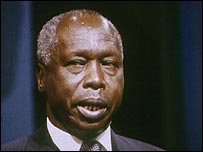
Former President Moi: Old and tiring or the most dangerous man in Kenyan politics today?
I have been insisting in this blog for a long time that former President Daniel Arap Moi is a major force to reckon with and he is destined to play a big role in the upcoming general elections. Some people felt that what I have been saying was a little far-fetched.
Last week the former President made a long trip to Northern Kenya on a tour that covered the Isiolo area and covered major constituencies that will be involved in the upcoming by-elections occasioned by the death of all leaders in the area in a recent air crash.
I have also insisted that the current battle for the Kanu Presidential nomination between secretary general, William Ruto and party chairman Uhuru Kenyatta is a carefully stage-managed affair that will end up with Kanu presenting a different candidate other than Uhuru Kenyatta as their presidential candidate.
Now recent political events are beginning to point more and more in the very direction we have been speaking about in this blog. One thing that many observers of the political scene have forgotten too quickly is that the self-proclaimed professor of politics has lost very few political battles in his life. Not to mention that his popularity at the moment is at an all time high. But even more important is the fact that many do not realize that the 2007 general elections will be the most critical political battle that Moi has ever fought in his long political career.
At stake is not only his legacy but the freedom of his favorite sons Gideon and Philip Moi, who have both been mentioned adversely in the Goldenberg scandal. Moi may be many things but the best description of him remains the one given by Jaramogi Oginga Odinga, (father of ODM's Raila Odinga) in his semi-autobigraphical book, "Not Yet Uhuru".
He very aptly and poetically described the tall in stature Moi as a giraffe that was always able to see very far ahead. At least much further ahead than others.
In plain language, if the 2007 general elections goes the wrong way, then Moi's sons will end up in prison and Moi's own freedom will also be in danger. Never has Moi fought a political battle with so much at stake. Nd he has fought many where the stakes were quite high.
In the Kenyatta days, Moi was humiliated beyond belief. One incident describes how after coming back from a foreign trip while still Vice President, he was stripped naked and searched "for concealed weapons" that he may have brought into the country. If you know how inmates are searched for concealed weapons, then you can begin to imagine how this particular search was carried out. Some of the people who mocked and ridiculed Moi then include the then Senior Assistant Commissioner incharge of Rift valley Province, a Mr J. Mungai, who was said to be a very close relative to the then President Kenyatta.
It is even said that on the death of Kenyatta in 1978, Moi got past a road block and headed to Nairobi, by hiding in the boot of a Peugeot 404.
Daniel Arap Moi survived all that. Including a botched up coup that was this close to being successful in 1982. Not to mention two hotly contested multi-party Presidential elections in 1992 and 1997. The man seems to have nine lives. But will he survive this one?
If the country goes the way the wananchi want it to go, then it will end up in the hands of a new generation of younger Kenyan leaders. In all likelihood they will follow the wishes of the majority and prosecute without fear or favor the perpetrators of Anglo Leasing and Goldenberg. Looted property and cash will also most likely have to be returned. This includes large tracts of land "grabbed" by Kenya's first President, Jomo Kenyatta and now in the hands of his family, including leader of the opposition, Uhur Kenyatta.
The people who rule Kenya are having sleepless nights trying to envisage such an occurrence.
Recently "noises" within the main Kanu faction are indicating that Kanu will go it alone in the forthcoming elections. Actually that is not entirely true. What is on the drawing boards behind the scenes is an alliance between Kibaki's Narc-Kenya and Kanu that will happen late into the campaigns and will see the Kanu Presidential nominee steeping down in favor of President Kibaki. That individual will be then be the incumbent's running mate and will be appointed Vice President. Common sense tells you that there is no way that candidate is going to be Uhuru Kenyatta. Both President Kibaki and Uhuru Kenyatta are from the Kikuyu tribe. To gain wide national support it is important that the two individuals are from different tribes. It will be somebody whom Moi can trust. There is a huge possibility that that person is not even in Kanu at the moment. I hereby submit two names that are possibilities, Musalia Mudavadi and Kalonzo Musyoka.
But because the youth factor is going to be very significant in this upcoming polls the probability is higher that the candidate might be William Ruto.
Remember that Moi still has all his mental faculties intact (he is also in much better health than President Kibaki), not to mention his vast experience. And this time he has the advantage of being able to concentrate on only one agenda, unlike the time when he was president when he had to juggle things "to keep several balls in the air at the same time." That makes Moi the most dangerous man in Kenyan politics today. Ignore him at your own peril.

Former President Moi: Old and tiring or the most dangerous man in Kenyan politics today?
I have been insisting in this blog for a long time that former President Daniel Arap Moi is a major force to reckon with and he is destined to play a big role in the upcoming general elections. Some people felt that what I have been saying was a little far-fetched.
Last week the former President made a long trip to Northern Kenya on a tour that covered the Isiolo area and covered major constituencies that will be involved in the upcoming by-elections occasioned by the death of all leaders in the area in a recent air crash.
I have also insisted that the current battle for the Kanu Presidential nomination between secretary general, William Ruto and party chairman Uhuru Kenyatta is a carefully stage-managed affair that will end up with Kanu presenting a different candidate other than Uhuru Kenyatta as their presidential candidate.
Now recent political events are beginning to point more and more in the very direction we have been speaking about in this blog. One thing that many observers of the political scene have forgotten too quickly is that the self-proclaimed professor of politics has lost very few political battles in his life. Not to mention that his popularity at the moment is at an all time high. But even more important is the fact that many do not realize that the 2007 general elections will be the most critical political battle that Moi has ever fought in his long political career.
At stake is not only his legacy but the freedom of his favorite sons Gideon and Philip Moi, who have both been mentioned adversely in the Goldenberg scandal. Moi may be many things but the best description of him remains the one given by Jaramogi Oginga Odinga, (father of ODM's Raila Odinga) in his semi-autobigraphical book, "Not Yet Uhuru".
He very aptly and poetically described the tall in stature Moi as a giraffe that was always able to see very far ahead. At least much further ahead than others.
In plain language, if the 2007 general elections goes the wrong way, then Moi's sons will end up in prison and Moi's own freedom will also be in danger. Never has Moi fought a political battle with so much at stake. Nd he has fought many where the stakes were quite high.
In the Kenyatta days, Moi was humiliated beyond belief. One incident describes how after coming back from a foreign trip while still Vice President, he was stripped naked and searched "for concealed weapons" that he may have brought into the country. If you know how inmates are searched for concealed weapons, then you can begin to imagine how this particular search was carried out. Some of the people who mocked and ridiculed Moi then include the then Senior Assistant Commissioner incharge of Rift valley Province, a Mr J. Mungai, who was said to be a very close relative to the then President Kenyatta.
It is even said that on the death of Kenyatta in 1978, Moi got past a road block and headed to Nairobi, by hiding in the boot of a Peugeot 404.
Daniel Arap Moi survived all that. Including a botched up coup that was this close to being successful in 1982. Not to mention two hotly contested multi-party Presidential elections in 1992 and 1997. The man seems to have nine lives. But will he survive this one?
If the country goes the way the wananchi want it to go, then it will end up in the hands of a new generation of younger Kenyan leaders. In all likelihood they will follow the wishes of the majority and prosecute without fear or favor the perpetrators of Anglo Leasing and Goldenberg. Looted property and cash will also most likely have to be returned. This includes large tracts of land "grabbed" by Kenya's first President, Jomo Kenyatta and now in the hands of his family, including leader of the opposition, Uhur Kenyatta.
The people who rule Kenya are having sleepless nights trying to envisage such an occurrence.
Recently "noises" within the main Kanu faction are indicating that Kanu will go it alone in the forthcoming elections. Actually that is not entirely true. What is on the drawing boards behind the scenes is an alliance between Kibaki's Narc-Kenya and Kanu that will happen late into the campaigns and will see the Kanu Presidential nominee steeping down in favor of President Kibaki. That individual will be then be the incumbent's running mate and will be appointed Vice President. Common sense tells you that there is no way that candidate is going to be Uhuru Kenyatta. Both President Kibaki and Uhuru Kenyatta are from the Kikuyu tribe. To gain wide national support it is important that the two individuals are from different tribes. It will be somebody whom Moi can trust. There is a huge possibility that that person is not even in Kanu at the moment. I hereby submit two names that are possibilities, Musalia Mudavadi and Kalonzo Musyoka.
But because the youth factor is going to be very significant in this upcoming polls the probability is higher that the candidate might be William Ruto.
Remember that Moi still has all his mental faculties intact (he is also in much better health than President Kibaki), not to mention his vast experience. And this time he has the advantage of being able to concentrate on only one agenda, unlike the time when he was president when he had to juggle things "to keep several balls in the air at the same time." That makes Moi the most dangerous man in Kenyan politics today. Ignore him at your own peril.
What Cost Wachira Waruru His Job? Was It The Githongo Interview Or The Referendum?
Wachira Waruru, the CEO who brought such sweeping changes to the national broadcaster KBC (Kenya Broadcasting Corporation), that it was hardly recognizable to Kenyans returning home after a short stint out of the country, has been fired.
But he was fired in a very interesting way. He was transferred or re-posted to some obscure government appointment. This is exactly the same way some cabinet ministers get fired. Actually this method of firing was perfected in Kenya by the late Tom Mboya when he was helping to dig his own grave by politically eliminating Oginga Odinga. Rather than being fired as VP, the constitution was changed so that it allowed for 8 Vice presidents, one for each province. It worked and the late Jaramogi father of ODM light Raila Odinga resigned in a huff.
Well, Wachira Waruru might just do that. But the big question is what provoked the government to remove KBC's most successful CEO in history? Was it the balanced reporting over the referndum that seemed to lean towards the popular feeling which was to say "no" to the new constitution? Or was it airing the damaging Githongo interviews. These are the two major incidences being mentioned by observers and analysts in Nairobi, but the truth is that KBC under Mr Waruru did very many things that could have annoyed a corrupt government led by people trapped in a time warp of the 1970s.
If I was a corrupt government and wanted to do some effective damage control, I would not stifle the media. That is the worst possible thing anybody can do. Why? Because people will get interested and the information will be disseminated using much more effective media and with greater impact through mobile phone SMS messages and email.
This government should have learnt their lesson from the Ouko affair in the 1990s. In those days no media house would dare publish the truth and the daring alternative press was yet to emerge in those days. But when an obscure Ugandan newspaper published a very detailed "leak" from the intelligence services of what happened, somebody faxed a copy of the page of that newspaper to a friend in Nairobi. Within a few hours the "Operation Bikini Report" had been re-faxed all over the country and everybody knew exactlyu who had fired the fatal shots that had killed the then foreign minister. More importantly they even knew who was present when the minister was murdered.
You can imagine what is possible in this information age where the Internet and mobile phones rule. Trying to muzzle the press or shuting down a media house is not only out of date it is just plain stupid and short sighted. As is sacking a man who has done such a good job that he deserves to be decorated with a national honor.
The message going forth is clear. Involvement in Anglo-Leasing can gain you promotion and at the very worst the powers that be will fight for you to retain your job inspite of pressure from the public (many Anglo-Leasing suspects are still in office like Vice President Moody Awori). But when you do good job, you endanger your very position.
Message received loud and clear.
But he was fired in a very interesting way. He was transferred or re-posted to some obscure government appointment. This is exactly the same way some cabinet ministers get fired. Actually this method of firing was perfected in Kenya by the late Tom Mboya when he was helping to dig his own grave by politically eliminating Oginga Odinga. Rather than being fired as VP, the constitution was changed so that it allowed for 8 Vice presidents, one for each province. It worked and the late Jaramogi father of ODM light Raila Odinga resigned in a huff.
Well, Wachira Waruru might just do that. But the big question is what provoked the government to remove KBC's most successful CEO in history? Was it the balanced reporting over the referndum that seemed to lean towards the popular feeling which was to say "no" to the new constitution? Or was it airing the damaging Githongo interviews. These are the two major incidences being mentioned by observers and analysts in Nairobi, but the truth is that KBC under Mr Waruru did very many things that could have annoyed a corrupt government led by people trapped in a time warp of the 1970s.
If I was a corrupt government and wanted to do some effective damage control, I would not stifle the media. That is the worst possible thing anybody can do. Why? Because people will get interested and the information will be disseminated using much more effective media and with greater impact through mobile phone SMS messages and email.
This government should have learnt their lesson from the Ouko affair in the 1990s. In those days no media house would dare publish the truth and the daring alternative press was yet to emerge in those days. But when an obscure Ugandan newspaper published a very detailed "leak" from the intelligence services of what happened, somebody faxed a copy of the page of that newspaper to a friend in Nairobi. Within a few hours the "Operation Bikini Report" had been re-faxed all over the country and everybody knew exactlyu who had fired the fatal shots that had killed the then foreign minister. More importantly they even knew who was present when the minister was murdered.
You can imagine what is possible in this information age where the Internet and mobile phones rule. Trying to muzzle the press or shuting down a media house is not only out of date it is just plain stupid and short sighted. As is sacking a man who has done such a good job that he deserves to be decorated with a national honor.
The message going forth is clear. Involvement in Anglo-Leasing can gain you promotion and at the very worst the powers that be will fight for you to retain your job inspite of pressure from the public (many Anglo-Leasing suspects are still in office like Vice President Moody Awori). But when you do good job, you endanger your very position.
Message received loud and clear.
Who Is KBC's Wachira Waruru?
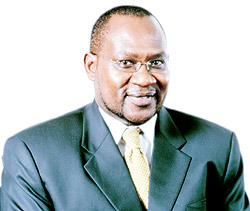
Immediate former KBC CEO Wachira Waruru
The first time I met "coach" as he was fondly nicknamed was at Lenana High School in 1978 where he was a sixth former and the school champion in the 100 metres dash. He also put his speed to great use playing rugby on the wing. Sadly he never extended his career to the club level and so many people missed this great talent.
But Mr Waruru had other talents that have stood him in good stead. Trained to be a teacher at Kenyatta University, Mr Waruru instead opted for a career in jourmalism, joining Hilary Ngweno's revolutionary new broadsheet daily in those days, The Nairobi Times as a stringer writing mostly business stories. His copy was so good that most of it got used and he was soon earning more than staff writers, which forced Ngweno to hurriedly hire him on full time basis. Shortly after that however, he Nairobi Times which was losing a lot of money despite its' quality was sold off to Kanu. The political party changed the name of the newspaper to Kenya Times and it was clear that they had no room for Waruru at the paper, because he was viewed as an anti-establishment radical.
Waruru was accomodated at Hilary Ngweno's other publication at the time, the weekly news magazine that shaped the face of journalism in Kenya, the legendary Weekly Review. He started off as a reporter but quickly climbed the ranks to be News Editor and then Managing Editor.
Meanwhile Waruru's other passion, motor rallying helped him build up important contacts that saw him launch his own PR and media consultancy business, which was moderately successful in the short space of time he run it before his appointment as Standard Newspapers CEO. Actually it was his contacts that helped him land the Standard appointment. Movers and shakers at the time like Gideon Moi and Mark Too, both great personal friends of Mr Waruru.
When Waruru's contract run out at The Standard newspapers, he was appointed KBC CEO by the Narc government, a position he has held for about 3 years now, until the recent developments. Wachira Waruru is the son of controversial Nyeri politician and former Cabinet Minister Waruru Kanja.
Tuesday, May 09, 2006
Habits Of The Aging And Its Impact on Kenyan Politics
My Dad is a handful of years younger than President Kibaki. He still has a very sharp mind and is in excellent physical condition, personally inspecting his acres of maize shambas regularly and on foot.
Rather than leave his vehicle at the edge of the shamba to minimize on the walking, he often leaves it at home.
Still there is no denying the fact that age is catching up. The usual tell-tale signs are there. You forget important names, you move more slowly despite yourself and the tendency is very much towards reminiscing, which tends to bring the most satisfaction. Nothing wrong with this nostalgic tendency and nothing wrong with a man enjoying the twilight of his years, more so when by God's grace he managed to stay out of the Kenyan cancer of corruption. Many of his colleagues who got rich overnight on bribes and corruption are now dead.
But do you realize that I have just described some key elements in the Kibaki administration? This administration came to power with the promise to revive stalled factories (most of them parastatals) and this smacks of reminiscing on the so-called golden era in Kenya of the 70s. (I suppose this was how the government planned to create 500,000 jobs a year.) The president is unable to see the realities of the times. How do you revive factories when the rest of the world is busy downsizing and closing them down? Unlike in the 70s jobs are created these days through small businesses. But then we are always busy frustrating small business by passing all sorts of laws and more quiet bylaws whose intention is to shut down as many small enterprises as possible.
President Kibaki's handling of the economy is one of the greatest achievements of this achievement-starved administration, but at what cost? We have lost one of the country's biggest employer industries, the horticultural sector. Thanks to the super-strong Kenyan shilling. The Kenyan shilling is now so strong that the unschooled would be excused for fearing that one Kenya shilling will soon exchange for one US dollar. But jokes, aside, does the strong shilling reflect reality?
In the 70s the economy thrived on a protected shilling so that when you made a foreign trip you were shocked at how cheap things were (because a traveler always gauges value by directly converting a price to their local currency).
Ask some of my friends how well the economy has done and you could probably be picking a fight. Kenyans have fled to the West using all sorts of ingenious methods (heard of the foreign student who relocates with the entire family? Yep, this student is about 55 years old and intends to study law. Many countries allow this). And where the means do not allow, some have fled to other African countries. Zambia, Malawi, South Africa, Botswana, Namibia. Others to neighboring and now un-welcoming Tanzania, and others to Uganda.
That's how well the Kenyan economy is doing. Watch what happens in the forthcoming general elections when some candidate tries to convince Mathare slum dwellers that the Kenyan economy has thrived under this coalition government.
Meanwhile the old men making decisions in this country are busy reminiscing and wondering why the crime rate is so high and why we can't go back to the lazy, prosperous, heady 70s. And probably why there seems to be so many "intimidating" computers all over the place. Does cabinet minister Njenga Karume have any computer skills (let alone Internet skills)? What about Vice President Moody Awori?
Whatever we do in the forthcoming polls, let's do the old men a favor and send them home to rest and enjoy their twilight years, as some of them go straight to prison for stealing property and cash belonging to the Kenyan people.
Lets vote in a young energetic government. At the very worst, at least things will move a lot faster. Even older voters should seriously consider whether we want to nostalgically shut down our country.
Rather than leave his vehicle at the edge of the shamba to minimize on the walking, he often leaves it at home.
Still there is no denying the fact that age is catching up. The usual tell-tale signs are there. You forget important names, you move more slowly despite yourself and the tendency is very much towards reminiscing, which tends to bring the most satisfaction. Nothing wrong with this nostalgic tendency and nothing wrong with a man enjoying the twilight of his years, more so when by God's grace he managed to stay out of the Kenyan cancer of corruption. Many of his colleagues who got rich overnight on bribes and corruption are now dead.
But do you realize that I have just described some key elements in the Kibaki administration? This administration came to power with the promise to revive stalled factories (most of them parastatals) and this smacks of reminiscing on the so-called golden era in Kenya of the 70s. (I suppose this was how the government planned to create 500,000 jobs a year.) The president is unable to see the realities of the times. How do you revive factories when the rest of the world is busy downsizing and closing them down? Unlike in the 70s jobs are created these days through small businesses. But then we are always busy frustrating small business by passing all sorts of laws and more quiet bylaws whose intention is to shut down as many small enterprises as possible.
President Kibaki's handling of the economy is one of the greatest achievements of this achievement-starved administration, but at what cost? We have lost one of the country's biggest employer industries, the horticultural sector. Thanks to the super-strong Kenyan shilling. The Kenyan shilling is now so strong that the unschooled would be excused for fearing that one Kenya shilling will soon exchange for one US dollar. But jokes, aside, does the strong shilling reflect reality?
In the 70s the economy thrived on a protected shilling so that when you made a foreign trip you were shocked at how cheap things were (because a traveler always gauges value by directly converting a price to their local currency).
Ask some of my friends how well the economy has done and you could probably be picking a fight. Kenyans have fled to the West using all sorts of ingenious methods (heard of the foreign student who relocates with the entire family? Yep, this student is about 55 years old and intends to study law. Many countries allow this). And where the means do not allow, some have fled to other African countries. Zambia, Malawi, South Africa, Botswana, Namibia. Others to neighboring and now un-welcoming Tanzania, and others to Uganda.
That's how well the Kenyan economy is doing. Watch what happens in the forthcoming general elections when some candidate tries to convince Mathare slum dwellers that the Kenyan economy has thrived under this coalition government.
Meanwhile the old men making decisions in this country are busy reminiscing and wondering why the crime rate is so high and why we can't go back to the lazy, prosperous, heady 70s. And probably why there seems to be so many "intimidating" computers all over the place. Does cabinet minister Njenga Karume have any computer skills (let alone Internet skills)? What about Vice President Moody Awori?
Whatever we do in the forthcoming polls, let's do the old men a favor and send them home to rest and enjoy their twilight years, as some of them go straight to prison for stealing property and cash belonging to the Kenyan people.
Lets vote in a young energetic government. At the very worst, at least things will move a lot faster. Even older voters should seriously consider whether we want to nostalgically shut down our country.
Kenyan Investors Nervous In Kikwete's Tanzania

President Jakaya Kikwete of Tanzania
Mood affecting other foreign investors as some begin to pack their bags and leave
The writing is clearly on the wall. All is not well in Tanzania. And most worryingly, all is not well with what has been the fastest growing economy in the region for a number of years now.
To give you a sign of the times, as I made a few inquiries before posting this article the Kenyan shilling rapidly continued creeping upwards and is now exchanging at an all time record of One Kenyan shilling to 17 Tanzania shillings. Up from shs Tshs 11 to the Kenyan shilling about a year ago. Signs are that the exchange rate is still rapidly heading northwards.
The Tanazinian shilling has also lost heavily against the dollar and other major world currencies. Some anlaysts fear that this could be partly due to capital flight. Something this infant and fast growing economy can ill afford at this time.
So what's the problem? Actually everything points at the recent change of leadership. The President who almost single-handedly brought more development in 10 years to Tanzania than had happened in all previous years put together, Benjamin William Mkapa completed his term and handed over power to President Jakaya Kikwete.
The new president has done everything to make the foreign investor in Tanzania very jittery indeed. There's been talk of reviewing mining contracts made with certain key investors. Now the latest is that there is a lot of complaints about hunting concessions in the country being dominated by foreigners. Actually these days you will see nothing else in local newspapers but complaints about foreigners.
It seems that already this has had a major impact on foreign investors in the country who were just beginning to recover from a crippling power rationing regime that had grounded virtually all the few industries currently in Tanzania for about a month.
Actually the truth is that the Tanzanian economy is controlled by foreign investors. That was Mkapa's strategy, which worked very well and now that Tanzanians are seeing signs of prosperity in their country for the first time, it seems they want their country back.
One local popular newspaper summed up the situation perfectly when it carried portraits of President Kikwete and former President Mkapa on the front page with their backs to each other. The paper clearly said that the two were as different as day and night. This is probably te most accurate comparison of the two men to appear in any news media in recent times.
Observers fear that the good work done by President Mkapa will be quickly undone by the new administration. The new government's top priority seems to be populist declarations which more stable and locally run economies like those of Kenya and Uganda would be much better placed to make.
The story with nationals of one of the largest foreign investors in this economy, Kenya is a rather extreme case. There are reports of at least two investors having their work permits quietly cancelled and being asked to leave the country and their heavy investments under the full control of their local Tanzanian partner. The quiet policy of not granting any new work permits to Kenyans seems not to have excluded the investors themselves.
The wazees in the Kibaki administration are too busy putting out local fires to address this situation. My source says, that judging by the number of complaints flooding the Kenyan Embassy In Dar-es-salaam, there is no way that word would not have reached the authorities in Nairobi by now.
Although the current situation has affected other foreign investors with some pulling out (the most recent case is the decision by South African Airways to withdraw from their partnership with Air Tanzania) it seems that Kenyan investors are the worst hit.
KQ Mid Air Scare That Nobody Wants To Talk About
Passengers aboard a Kenya Airways morning flight on Thursday (May 4th) flying from Nairobi to Dar-es-salaam went through a terrifying ordeal that forced the pilot to land back In Nairobi barely 10 minutes after take off.
A person on the flight who talked to this blogger said that the first thing they noticed was unusually violent turbulence, which they attributed to the rather heavy clouds. However shortly after the violent shaking started, the pilot came on the intercom and announced that the aircraft was going back to Nairobi. He reassured the passengers that there was no cause for panic and it was only a problem with "leaking hydraulic oil".
On approaching JKIA, Nairobi, for landing my source noticed a very heavy presence of ambulance, fire engines and other emergency personnel on the ground. The aircraft taxied and came to a halt on a runaway very far from the main airport terminus. An attempt was made to tow the aircraft but this failed when the tires gave in and rapidly deflated. As passengers quickly disembarked to be driven to the airport lounge, to await the next flight, my source noticed very heavy leaking of some liquid-like substance that was already flooding the runaway. Some passengers claimed that the pilot had dumped fuel in readiness for a possible crash-landing. But this is unlikely because this is not the way fuel is usually dumped. It is actually "dumped" and not "slowly leaked."
No statement was issued by the airline and no report has appeared in any newspaper or major media house yet.
A person on the flight who talked to this blogger said that the first thing they noticed was unusually violent turbulence, which they attributed to the rather heavy clouds. However shortly after the violent shaking started, the pilot came on the intercom and announced that the aircraft was going back to Nairobi. He reassured the passengers that there was no cause for panic and it was only a problem with "leaking hydraulic oil".
On approaching JKIA, Nairobi, for landing my source noticed a very heavy presence of ambulance, fire engines and other emergency personnel on the ground. The aircraft taxied and came to a halt on a runaway very far from the main airport terminus. An attempt was made to tow the aircraft but this failed when the tires gave in and rapidly deflated. As passengers quickly disembarked to be driven to the airport lounge, to await the next flight, my source noticed very heavy leaking of some liquid-like substance that was already flooding the runaway. Some passengers claimed that the pilot had dumped fuel in readiness for a possible crash-landing. But this is unlikely because this is not the way fuel is usually dumped. It is actually "dumped" and not "slowly leaked."
No statement was issued by the airline and no report has appeared in any newspaper or major media house yet.
Wednesday, May 03, 2006
Is Kikwete Planning To Reptriate All Kenyans?
Recent quiet developments cause concern amongst the Kenyan community in Tanzania. Will history repeat itself?
The new government of President Jakaya Kikwete has hardly been in power for 5 months but already Kenyans living in the country are starting to feel the heat. At first this blogger thought that the developments in the still officially socialist nation of Tanzania is in reaction to the Kenyan domination that is beginning to emerge in many parts of Africa and indeed the world.
Diminishing opportunities back home that started in the dark Kanu days, has led many Kenyans to relocate to many other parts of Africa and the world where their superior educational background and sheer determination is beginning to show. We now have a sizeable Kenyan community in most African countries and in some of them Kenyans are now being seen as a threat.
However evidence on the ground clearly indicates that the Tanzanian situation is quite different.
Impeccable sources have informed this blogger that since the beginning of the year, some prominent Kenyans have had their work permits quietly cancelled and have been asked to leave the country. The same sources have proved to this blogger that the government policy in Tanzania now is that no expired Kenyan work permits are being renewed and new ones will not be issued to any Kenyan. This policy does not seem to affect nationals of other countries, most notably South Africans (mostly white) and expatriates from the West.
Further reports indicate that some prominent Kenyan busainessmen in Tanzania have not been spared and some have had their owrk permits withdrawn and asked to leave their businesses with their Tanzanian partners in corcumstances that are not clear.
What complicates the situation further is that the Tanzanian government's official position when asked about work permits that have delayed for months on end is that they are still being processed. That was the recent answer given by the immigration minister when the question was raised in Arusha during the East African heads of State meeting.
Investigations on the ground indicate that there is now emerging evidence that the style of diplomacy expected from President Jakaya Kikwete, the most popularly elected President in the history of East Africa and probably beyond, is that of saying one thing officially and then doing the exact opposite in practice. Resident Kikwete is the immediate former Foreign Minister for Tanzania. This practice of saying one thing and then doing the opposite is exactly how war-time Germany's Adolf Hitler caught everybody flat-footed by talking peace when he was actually busy preparing for war.
A recent incident where a Briton was denied entry into Tanzania from what appeared to be "instructions from State House, Dar" is illuminating. A few days after this occurrence that was probably just about to blow out into a full diplomatic controversy, local newspapers in Tanzania revealed that there were conmen posing as senior State House officials. Somehow the newspapers were able to get the usually hush hush information that a Briton had actually been denied entry into Tanzania by one of the alleged "conmen".
Maybe the story was true after all, and there were actually conmen operating with close links to Kikwete's State house, but one wonders what the motive of such a conman would have been. What do you gain from denying a Briton entry into the country? The assumption is that conmen are supposed to operate with financial gain as their driving motive.
What most Kenyans on the ground see, is an emerging pattern in the style of leadership of the new President and it seems that one his key agendas is to deal with the "Kenyan problem."
It is clear that Kenyans living in neighboring Tanzania are now experiencing what ODM leader Raila Odinga has been going through for a long time with rampant "Raila phobia" in the circles of power. There is serious "Kenyans phobia" in Tanzania.
Nothing illustrates this better that the recent developments at the country's badly bleeding national carrier, Air Tanzania. About 3 years ago Air Tanzania entered into a strategic partnership with South African Airlines. The latter rudely brushed aside Kenya Airways who had shown an interest in entering into a similar arrangement with Air Tanzania. Now the "marriage" with the South Africans is headed for divorce. But when Kenya Airways (through Precision Air, a privately owned Tanzanian airline where KQ owns 49% of the shares) indicated that they were interested in taking over where SAA left off and injecting the cash required, it caused quite a stir in Dar. It was clear that there was open hostility and opposition towards any such development which culminated in front page newspaper articles quoting "unnamed experts" who said that it would be a mistake for Air Tanzania to be sold to anybody again. They suggested instead that the government pumps in more money and runs the airline. Obviously the so-called experts are yet to hear of 9/11 and the impact it has had on the airline industry which has left very few profitable airlines in the world. In fact Kenya Airways itself is very fortunate to be still in the black. It can be attributed more to plenty of luck, and the right combination of circumstances than to the excellent professional management. Interestingly even SAA that is wholly government owned has not made a profit for the last few years.
But Air Tanzania is a local issue and the Tanzanians have the full prerogative to do what they want with their national carrier. The main point of this post is to paint a clear picture of what is going on, on the ground.
Apparently rumours have been doing the rounds for weeks now, that the government is expected to make a major move against Kenyans living in Tanzania soon. It is not clear what this confrontation is going to be but the rumors have persisted.
This blogger is informed that incase there is a mass ejection of Kenyans from Tanzania, it will not be the first time it has happened. It happened in the 70s and Kenya swiftly reciprocated the move by repatriating Tanzanians then living in Kenya.
My informant may have sounded a little bitter when they made the following concluding remarks;
"Whatever happens, every effort should be made to get the Tanzania government to put its' cards on the table concerning Kenyans living in their country. Maybe Kenyans living in Tanzania should just take the initiative and leave en-mass to help the Tanzanians rid themselves of "the problem". There are plenty of opportunities from more welcoming emerging nations like Sudan and Rwanda, not to mention Malawi and Zambia."
See also why ordinary Tanzanians do not support free movement of labour and the proposed East African Federation.
The new government of President Jakaya Kikwete has hardly been in power for 5 months but already Kenyans living in the country are starting to feel the heat. At first this blogger thought that the developments in the still officially socialist nation of Tanzania is in reaction to the Kenyan domination that is beginning to emerge in many parts of Africa and indeed the world.
Diminishing opportunities back home that started in the dark Kanu days, has led many Kenyans to relocate to many other parts of Africa and the world where their superior educational background and sheer determination is beginning to show. We now have a sizeable Kenyan community in most African countries and in some of them Kenyans are now being seen as a threat.
However evidence on the ground clearly indicates that the Tanzanian situation is quite different.
Impeccable sources have informed this blogger that since the beginning of the year, some prominent Kenyans have had their work permits quietly cancelled and have been asked to leave the country. The same sources have proved to this blogger that the government policy in Tanzania now is that no expired Kenyan work permits are being renewed and new ones will not be issued to any Kenyan. This policy does not seem to affect nationals of other countries, most notably South Africans (mostly white) and expatriates from the West.
Further reports indicate that some prominent Kenyan busainessmen in Tanzania have not been spared and some have had their owrk permits withdrawn and asked to leave their businesses with their Tanzanian partners in corcumstances that are not clear.
What complicates the situation further is that the Tanzanian government's official position when asked about work permits that have delayed for months on end is that they are still being processed. That was the recent answer given by the immigration minister when the question was raised in Arusha during the East African heads of State meeting.
Investigations on the ground indicate that there is now emerging evidence that the style of diplomacy expected from President Jakaya Kikwete, the most popularly elected President in the history of East Africa and probably beyond, is that of saying one thing officially and then doing the exact opposite in practice. Resident Kikwete is the immediate former Foreign Minister for Tanzania. This practice of saying one thing and then doing the opposite is exactly how war-time Germany's Adolf Hitler caught everybody flat-footed by talking peace when he was actually busy preparing for war.
A recent incident where a Briton was denied entry into Tanzania from what appeared to be "instructions from State House, Dar" is illuminating. A few days after this occurrence that was probably just about to blow out into a full diplomatic controversy, local newspapers in Tanzania revealed that there were conmen posing as senior State House officials. Somehow the newspapers were able to get the usually hush hush information that a Briton had actually been denied entry into Tanzania by one of the alleged "conmen".
Maybe the story was true after all, and there were actually conmen operating with close links to Kikwete's State house, but one wonders what the motive of such a conman would have been. What do you gain from denying a Briton entry into the country? The assumption is that conmen are supposed to operate with financial gain as their driving motive.
What most Kenyans on the ground see, is an emerging pattern in the style of leadership of the new President and it seems that one his key agendas is to deal with the "Kenyan problem."
It is clear that Kenyans living in neighboring Tanzania are now experiencing what ODM leader Raila Odinga has been going through for a long time with rampant "Raila phobia" in the circles of power. There is serious "Kenyans phobia" in Tanzania.
Nothing illustrates this better that the recent developments at the country's badly bleeding national carrier, Air Tanzania. About 3 years ago Air Tanzania entered into a strategic partnership with South African Airlines. The latter rudely brushed aside Kenya Airways who had shown an interest in entering into a similar arrangement with Air Tanzania. Now the "marriage" with the South Africans is headed for divorce. But when Kenya Airways (through Precision Air, a privately owned Tanzanian airline where KQ owns 49% of the shares) indicated that they were interested in taking over where SAA left off and injecting the cash required, it caused quite a stir in Dar. It was clear that there was open hostility and opposition towards any such development which culminated in front page newspaper articles quoting "unnamed experts" who said that it would be a mistake for Air Tanzania to be sold to anybody again. They suggested instead that the government pumps in more money and runs the airline. Obviously the so-called experts are yet to hear of 9/11 and the impact it has had on the airline industry which has left very few profitable airlines in the world. In fact Kenya Airways itself is very fortunate to be still in the black. It can be attributed more to plenty of luck, and the right combination of circumstances than to the excellent professional management. Interestingly even SAA that is wholly government owned has not made a profit for the last few years.
But Air Tanzania is a local issue and the Tanzanians have the full prerogative to do what they want with their national carrier. The main point of this post is to paint a clear picture of what is going on, on the ground.
Apparently rumours have been doing the rounds for weeks now, that the government is expected to make a major move against Kenyans living in Tanzania soon. It is not clear what this confrontation is going to be but the rumors have persisted.
This blogger is informed that incase there is a mass ejection of Kenyans from Tanzania, it will not be the first time it has happened. It happened in the 70s and Kenya swiftly reciprocated the move by repatriating Tanzanians then living in Kenya.
My informant may have sounded a little bitter when they made the following concluding remarks;
"Whatever happens, every effort should be made to get the Tanzania government to put its' cards on the table concerning Kenyans living in their country. Maybe Kenyans living in Tanzania should just take the initiative and leave en-mass to help the Tanzanians rid themselves of "the problem". There are plenty of opportunities from more welcoming emerging nations like Sudan and Rwanda, not to mention Malawi and Zambia."
See also why ordinary Tanzanians do not support free movement of labour and the proposed East African Federation.
Tuesday, May 02, 2006
Blogger Delays Posts As Big Kenyan Story About To Break
While on some routine research as a follow up to a comment made by a reader in this blog, this blogger stumbled on what has got to be one of the biggest stories of the year.
I delayed writing any post on Thursday and even today. Am currently compiling the posts with information obtained from impeccable sources. This story will shock many Kenyans and will give many non-Kenyans a unique glimpse on what is to come.
Don’t miss it, it will be posted by tomorrow afternoon, Kenyan time.
I delayed writing any post on Thursday and even today. Am currently compiling the posts with information obtained from impeccable sources. This story will shock many Kenyans and will give many non-Kenyans a unique glimpse on what is to come.
Don’t miss it, it will be posted by tomorrow afternoon, Kenyan time.
Tuesday, April 25, 2006
Our Immoral Kenyan MPs Are At It Again
This time its' much worse than Koinange Street
Our politicians in Kenya are really ahead of the world in all the wrong things. The latest controversy where Ministerial perks have been dramatically increased and MPs (whatever excuse they are using) also "want something" is nothing short of immoral when you consider the hardships and great difficulties that Kenyans are currently going through.
To this blogger there is really no difference in both sides of the house as Kenyans will find out if they make the mistake of shifting their votes to the other side of the floor hoping for genuine change to come from the nice rhetoric we are being treated to.
It is amazing what short memories Kenyan voters have when it was just the other day, early in the Narc administration when several top Narc officials including cabinet ministers were caught literally with their pants down in the notorious red light district that is Koinange street at night. (Is it any wonder that some are suspecting Gomorah-like hail and brimstone in the jinx of deaths, accidents and bad luck that has dogged this parliament and which started before they had even sat down for business?)
For the uninformed the sort of girls you would pick up on Koinange street in Nairobi at night are mostly under the legal age for sex – with consent or not. In other words it is a serious criminal offence to have sex with this poverty-stricken youngsters (whose equally-young mail siblings are usually out at about the same time carjacking and shooting innocent motorists dead).
One would be tempted to ask what the MPs are going to do with all the extra tax-payers money that they are eager to line their pockets with.
This bloggers answer: Members will of course patriotically pump it back into the economy via Koinange street.
Anybody who has illusions that the spending habits of most MPs will allow them to save the cash for the upcoming general elections should have their heads examined.
You will excuse my getting very upset and being on an extremely short fuse when discussing the conduct of members of the august house. Many readers of this blog have never been inside a cardboard house in the Mathare slums. Nor used the toilet facilities in the slums (nothing more than a polythene paperbag of your choice which you then hurl into the garbage heap nearby and thus increase the pollution which your nose can no longer detect if you've lived there for a couple of months).
Many readers of this blog also do not know what it feels like to go hungry and become so desperate because you have a family to feed and you have no idea where the next meal is going to come from.
In this kind of environment it is not only immoral but criminal for a cabinet minister to take home a million Kenya shillings. Fellow Kenyans prepare your voting cards and let’s vote in a new generation of Kenyans for better or for worse because things can surely not be left to continue the way they are.
Read the full disgusting details.
Our politicians in Kenya are really ahead of the world in all the wrong things. The latest controversy where Ministerial perks have been dramatically increased and MPs (whatever excuse they are using) also "want something" is nothing short of immoral when you consider the hardships and great difficulties that Kenyans are currently going through.
To this blogger there is really no difference in both sides of the house as Kenyans will find out if they make the mistake of shifting their votes to the other side of the floor hoping for genuine change to come from the nice rhetoric we are being treated to.
It is amazing what short memories Kenyan voters have when it was just the other day, early in the Narc administration when several top Narc officials including cabinet ministers were caught literally with their pants down in the notorious red light district that is Koinange street at night. (Is it any wonder that some are suspecting Gomorah-like hail and brimstone in the jinx of deaths, accidents and bad luck that has dogged this parliament and which started before they had even sat down for business?)
For the uninformed the sort of girls you would pick up on Koinange street in Nairobi at night are mostly under the legal age for sex – with consent or not. In other words it is a serious criminal offence to have sex with this poverty-stricken youngsters (whose equally-young mail siblings are usually out at about the same time carjacking and shooting innocent motorists dead).
One would be tempted to ask what the MPs are going to do with all the extra tax-payers money that they are eager to line their pockets with.
This bloggers answer: Members will of course patriotically pump it back into the economy via Koinange street.
Anybody who has illusions that the spending habits of most MPs will allow them to save the cash for the upcoming general elections should have their heads examined.
You will excuse my getting very upset and being on an extremely short fuse when discussing the conduct of members of the august house. Many readers of this blog have never been inside a cardboard house in the Mathare slums. Nor used the toilet facilities in the slums (nothing more than a polythene paperbag of your choice which you then hurl into the garbage heap nearby and thus increase the pollution which your nose can no longer detect if you've lived there for a couple of months).
Many readers of this blog also do not know what it feels like to go hungry and become so desperate because you have a family to feed and you have no idea where the next meal is going to come from.
In this kind of environment it is not only immoral but criminal for a cabinet minister to take home a million Kenya shillings. Fellow Kenyans prepare your voting cards and let’s vote in a new generation of Kenyans for better or for worse because things can surely not be left to continue the way they are.
Read the full disgusting details.
Tanzania's President Kikwete Has A Problem With Kenyans Living In His Country
In all the rhetoric we are being treated to about the proposed East African political federation a significant fact has stayed out of the news pages. And that is the fact that one partner, is very apprehensive about opening up her borders to the free movement of East Africans. That member is Tanzania.
Kenya and Uganda will open up their borders to free movement tomorrow, if given half a chance, but Tanzania is holding back everybody. And not without reason. Apart from the fact that it is easier for a Kenyan to obtain a work permit in the United States than it is for them to do so in Tanzania, there are recent developments that are of grave concern to the young government of President Jakaya Kikwete.
Since the beginning of this year Tanzania has been hit by a spate of violent crimes that is unprecedented in it's history and has included a number of high profile bank robberies. The authorities there and the press in general are not in doubt as to where the masterminds of these gruesome crimes come from (the mostly Swahili press keeps on using the phrase "criminal elements from a neighboring country").
It is now clear that as the war on crime in Kenya has intensified and as individuals and organizations have reacted by tightening security, those who live on crime are feeling the heat. And already there is evidence that many of them have gone regional (some hardened wanted criminals were recently arrested in Mozambique). It is quite likely that the source of heightened criminal activity in Tanzania is indeed Kenya.
The issue of crime is so worrying to the Tanzanian government that this blogger has reliably been informed that some Somali's were recently denied entry into Tanzania through the Namanga border. Immigration officials on the ground indicated that the new policy was to bar entry to persons of Somali origin. Everybody knows that these are the nice folks who engage in selling automatic weapons from a certain well known estate in Nairobi. But then not all Somalis are gunrunners just like not all Arabs are suicide bombers.
Genuine businesspersons and citizens of the three East African countries looking to benefit from the new East African initiative will obviously suffer the consequences of these new developments. Although criminals do not require work permits to operate and neither do they usually cross the border at designated border crossings, there is little doubt that free movement of the peoples of East Africa will be delayed for some time to come because of these recent developments.
Kenya and Uganda will open up their borders to free movement tomorrow, if given half a chance, but Tanzania is holding back everybody. And not without reason. Apart from the fact that it is easier for a Kenyan to obtain a work permit in the United States than it is for them to do so in Tanzania, there are recent developments that are of grave concern to the young government of President Jakaya Kikwete.
Since the beginning of this year Tanzania has been hit by a spate of violent crimes that is unprecedented in it's history and has included a number of high profile bank robberies. The authorities there and the press in general are not in doubt as to where the masterminds of these gruesome crimes come from (the mostly Swahili press keeps on using the phrase "criminal elements from a neighboring country").
It is now clear that as the war on crime in Kenya has intensified and as individuals and organizations have reacted by tightening security, those who live on crime are feeling the heat. And already there is evidence that many of them have gone regional (some hardened wanted criminals were recently arrested in Mozambique). It is quite likely that the source of heightened criminal activity in Tanzania is indeed Kenya.
The issue of crime is so worrying to the Tanzanian government that this blogger has reliably been informed that some Somali's were recently denied entry into Tanzania through the Namanga border. Immigration officials on the ground indicated that the new policy was to bar entry to persons of Somali origin. Everybody knows that these are the nice folks who engage in selling automatic weapons from a certain well known estate in Nairobi. But then not all Somalis are gunrunners just like not all Arabs are suicide bombers.
Genuine businesspersons and citizens of the three East African countries looking to benefit from the new East African initiative will obviously suffer the consequences of these new developments. Although criminals do not require work permits to operate and neither do they usually cross the border at designated border crossings, there is little doubt that free movement of the peoples of East Africa will be delayed for some time to come because of these recent developments.
Thursday, April 20, 2006
What’s All This Secrecy About Raphael Tuju’s Health?
Hon Raphael Tuju, Kenyan Foreign Minister
I stand to be corrected, but I thought that when a country’s foreign minister is admitted to any hospital, let alone a foreign one, this is supossed to be very big news. It does not matter if they are suffering from the common cold or something a lot more serious. More so at this time when there seems to be some strange jinx for accidents, bad luck and death that has hit the current government since it came into power.
But editors in the print media in Kenya seem to disagree with my view. They have given a total news black out to Raphael Tuju’s health-related problems in Australia. The Nation carried only a few lines that left readers in more suspense and asking more questions. So what’s going on?
It appears that Foreign Minister Raphael Tuju was admitted in a Sidney Hospital suffering from a "swollen leg" after a long flight from Nairobi to Sidney. These kind of inflight symptoms are not to be taken lightly as some fatalities have been reported in the past.
Luckily it seems the minister is out of any danger because he was discharged yesterday (after being admitted on Monday).
This blogger is busy trying to get some more information from the media in Australia.
John Githongo's American Tour And More About Kenyans Being Their Own Worst Enemies
Here is the comment that I received yesterday republished in full.
Whispering Inn said...
Wait a minute now, those are some pretty hefty, and if unsabstantiated, careless and wild, allegations that you've made there.
What is with all this penchant for conspiratorial mumbo jumbo that Kenyans seem so adept at wallowing in?
"Who's behind this?"
"Why is he doing that?"
"What's where, which, when and by whom?!"
Petty, petty, petty!
Githongo IS not running for president, either in 2007 or anytime soon.
This, I heard him say, in person, 2 weeks ago in DC, and in an interview with National Public Radio.
Perhaps we are so used to mediocrity and moronic leadership that when we get one brilliant incorruptible guy, we immediately start a witchhunt for ulterior motives and wildly speculate about conspiracies.
The man wanted to do his job well, did it for as long as he could - amid unimaginable barriers thrown his way by the powers that be - and now he's talking about the ills and effects of State-sanctioned corruption in Africa.
Nothing wrong with that.
But Kenyans, in their warped thinking, have let their innate obsession with petty imaginations cloud their judgement and cannot, therefore, understand that Githongo is doing what he's doing so that Kenyans/Africans can be saved from the yoke of bad governance!
It's one thing, and infact it's understandable, when the Murungarus and other corrupt folks question and discredit Githongo in an attempt to save their behinds.
But it's ATROCIOUS when ordinary Kenyans cannot see when they're being helped, and eagerly jump in the mudslinging bandwagon to attack someone who was almost killed for their sake!
Are Kenyans their own worst enemies? You bet!
555555555555555555555555555555
My Reply:
Dear Patriotic Fellow Kenyan (anybody who regularly reads an obscure blog on Kenya is a Kenyan in my book irrespective of their nationality of origin)
I agree with you that we Kenyans are often our own worst enemies. In fact I agree not 100% but 1000%
However in the game of politics I am yet to be convinced that such a thing as a free hand out exists. I'm probably too skeptical and probably even wrong in this particular case but foreign powers have caused too much havoc on the continent of Africa for me to totally ignore the historical facts of the last 100 years and those of the last 100 days.
Let time be the judge.
Whispering Inn said...
Wait a minute now, those are some pretty hefty, and if unsabstantiated, careless and wild, allegations that you've made there.
What is with all this penchant for conspiratorial mumbo jumbo that Kenyans seem so adept at wallowing in?
"Who's behind this?"
"Why is he doing that?"
"What's where, which, when and by whom?!"
Petty, petty, petty!
Githongo IS not running for president, either in 2007 or anytime soon.
This, I heard him say, in person, 2 weeks ago in DC, and in an interview with National Public Radio.
Perhaps we are so used to mediocrity and moronic leadership that when we get one brilliant incorruptible guy, we immediately start a witchhunt for ulterior motives and wildly speculate about conspiracies.
The man wanted to do his job well, did it for as long as he could - amid unimaginable barriers thrown his way by the powers that be - and now he's talking about the ills and effects of State-sanctioned corruption in Africa.
Nothing wrong with that.
But Kenyans, in their warped thinking, have let their innate obsession with petty imaginations cloud their judgement and cannot, therefore, understand that Githongo is doing what he's doing so that Kenyans/Africans can be saved from the yoke of bad governance!
It's one thing, and infact it's understandable, when the Murungarus and other corrupt folks question and discredit Githongo in an attempt to save their behinds.
But it's ATROCIOUS when ordinary Kenyans cannot see when they're being helped, and eagerly jump in the mudslinging bandwagon to attack someone who was almost killed for their sake!
Are Kenyans their own worst enemies? You bet!
555555555555555555555555555555
My Reply:
Dear Patriotic Fellow Kenyan (anybody who regularly reads an obscure blog on Kenya is a Kenyan in my book irrespective of their nationality of origin)
I agree with you that we Kenyans are often our own worst enemies. In fact I agree not 100% but 1000%
However in the game of politics I am yet to be convinced that such a thing as a free hand out exists. I'm probably too skeptical and probably even wrong in this particular case but foreign powers have caused too much havoc on the continent of Africa for me to totally ignore the historical facts of the last 100 years and those of the last 100 days.
Let time be the judge.
The Day Karl Max Was Expelled From Kanu
Are Kenyans Their Own Worst Enemies?
…. You bet!!
Yesterday I received a very angry response to my Tuesday blog on former ethics PS John Githongo. I have decided to republish it in full in my next post, see below (many people sometimes miss comments) because although I disagree with the main gist of the comment, there is a particular characteristic that the writer accuses Kenyans of that is 1000% true.
But before we delve into that, some points on a lighter note first.
It is in order for me to explain why I have no problem with people who do not agree with me. Admittedly this is very strange behavior in Kenya. (odd when we are fighting for more democratic space. I guess in Kenya democracy means freedom to agree. Imagine debates in Parliament where everybody is nodding their heads in strong agreement even as some of them nod off to sleep. This was Kanu's big vision. (Moi says it is the African way of doing things and that was how he came up with the nightmarish queue-voting system of the late 80's).
The right Kenyan thing for me to have done when I received the comment, would have been to castigate the writer as an unpatriotic Kenyan serving the same interests of the foreign masters I was talking about. An enemy of development, and of the good people of Kenya. …And all that rubbish. Or maybe I should have called for his expulsion from all political parties in Kenya including the ODM.
A Kenyan politician at the height of Kanuism, in the 1980s having heard of the alleged increased Karl Marx influence at the University of Nairobi made a strange call. He called for the immediate expulsion of the said Karl Max from the University of Nairobi and from Kanu (there was no other political party in those days so the politician was sure that anybody as politically active as Mr Karl Max was, had to be a member of Kanu.)
My point is that the current crop of politicians still have "old Kanu blood" running through their veins and they therefore cannot absorb new ideas and democracy is a pretty new idea to them. That's all the more reason why we need a generational change in our politics.
This point was brought home to me rather vividly shortly after the 2002 general elections. My 65 year old father who had cheered the Narc victory with me frowned on any opposition the government was receiving. Coming from a man who's level of education and understanding is higher than that of most Kenyans, you begin to get a picture of what I am talking about here. A lot of other things we disagreed on made on thing very clear.
In the Kanu days we agreed on everything which was that Kanu had to go as soon as possible. Now that the common enemy was gone, the generation gap became very clear. Whatever the outcome of the coming general elections, this is going to be the major issue and since Kenyans can often be their own worst enemies, the possibility is that some voters may refuse to shift from the old-tired-tried-tested-and-failed-miserably crop of current politicians. These guys are currently a big embarrassment to the people of Kenya. Let's start debating these issues early before the wise old foxes start working people's emotions and tribal demons.
…. You bet!!
Yesterday I received a very angry response to my Tuesday blog on former ethics PS John Githongo. I have decided to republish it in full in my next post, see below (many people sometimes miss comments) because although I disagree with the main gist of the comment, there is a particular characteristic that the writer accuses Kenyans of that is 1000% true.
But before we delve into that, some points on a lighter note first.
It is in order for me to explain why I have no problem with people who do not agree with me. Admittedly this is very strange behavior in Kenya. (odd when we are fighting for more democratic space. I guess in Kenya democracy means freedom to agree. Imagine debates in Parliament where everybody is nodding their heads in strong agreement even as some of them nod off to sleep. This was Kanu's big vision. (Moi says it is the African way of doing things and that was how he came up with the nightmarish queue-voting system of the late 80's).
The right Kenyan thing for me to have done when I received the comment, would have been to castigate the writer as an unpatriotic Kenyan serving the same interests of the foreign masters I was talking about. An enemy of development, and of the good people of Kenya. …And all that rubbish. Or maybe I should have called for his expulsion from all political parties in Kenya including the ODM.
A Kenyan politician at the height of Kanuism, in the 1980s having heard of the alleged increased Karl Marx influence at the University of Nairobi made a strange call. He called for the immediate expulsion of the said Karl Max from the University of Nairobi and from Kanu (there was no other political party in those days so the politician was sure that anybody as politically active as Mr Karl Max was, had to be a member of Kanu.)
My point is that the current crop of politicians still have "old Kanu blood" running through their veins and they therefore cannot absorb new ideas and democracy is a pretty new idea to them. That's all the more reason why we need a generational change in our politics.
This point was brought home to me rather vividly shortly after the 2002 general elections. My 65 year old father who had cheered the Narc victory with me frowned on any opposition the government was receiving. Coming from a man who's level of education and understanding is higher than that of most Kenyans, you begin to get a picture of what I am talking about here. A lot of other things we disagreed on made on thing very clear.
In the Kanu days we agreed on everything which was that Kanu had to go as soon as possible. Now that the common enemy was gone, the generation gap became very clear. Whatever the outcome of the coming general elections, this is going to be the major issue and since Kenyans can often be their own worst enemies, the possibility is that some voters may refuse to shift from the old-tired-tried-tested-and-failed-miserably crop of current politicians. These guys are currently a big embarrassment to the people of Kenya. Let's start debating these issues early before the wise old foxes start working people's emotions and tribal demons.
Tuesday, April 18, 2006
Githongo Follows In The Foot-Steps Of Thomas Joseph Mboya
So what's Githongo doing in the States now? He's all over the place making appearances and giving interviews to the press.
What does that sound to you?
Of course it is a well-orchestrated PR campaign designed to build up a case against the corrupt Kenyan government and to build up the image of Githongo in the key American media. The whole idea is to get the full attention of the American public so that Washington pays more attention.
Two disturbing questions come to mind.
Who is behind all this?
And what is their intention?
All this points to one of the saddest things about Kenyan political heroes. So far they have hardly been homegrown. The path that Githongo is following is very similar to that another Kenyan political hero took in the 1950s (about 50 years ago). I am of course referring to Tom Mboya who received massive support from the Americans and was rumored to have been a CIA agent.
And in what looks like a very carefully orchestrated PR campaign, Githongo denied once again that he had plans of standing for President in next year's general elections.
This blogger is deeply ashamed and disturbed that this blog's favorite candidate for the presidency is being financed by some shadowy guys in the background.
What does that sound to you?
Of course it is a well-orchestrated PR campaign designed to build up a case against the corrupt Kenyan government and to build up the image of Githongo in the key American media. The whole idea is to get the full attention of the American public so that Washington pays more attention.
Two disturbing questions come to mind.
Who is behind all this?
And what is their intention?
All this points to one of the saddest things about Kenyan political heroes. So far they have hardly been homegrown. The path that Githongo is following is very similar to that another Kenyan political hero took in the 1950s (about 50 years ago). I am of course referring to Tom Mboya who received massive support from the Americans and was rumored to have been a CIA agent.
And in what looks like a very carefully orchestrated PR campaign, Githongo denied once again that he had plans of standing for President in next year's general elections.
This blogger is deeply ashamed and disturbed that this blog's favorite candidate for the presidency is being financed by some shadowy guys in the background.
The Futility Of Clamping Down On The Media
The Standard group has a lot to thank the Kibaki administration for. Thanks to the police raid, circulation is up and everybody is paying a lot more attention to this newspaper whose fortunes had greatly dwindled at the time of the mid night raid.
While it is still not clear whether the national security issues that were at stake when the decision to raid Kenya's oldest media group was taken, there is no doubt that the media group is much better off because of the raid.
Will politicians never learn about the futility of clamping down on the media?
While it is still not clear whether the national security issues that were at stake when the decision to raid Kenya's oldest media group was taken, there is no doubt that the media group is much better off because of the raid.
Will politicians never learn about the futility of clamping down on the media?
Why President Kibaki Must have Known About Standard Raid
During a recent visit to the United States, former ethics PS, John Githongo, stated the obvious when he said that he thought President Kibaki was made aware in advance of the raid on the Standard group (Standard newspapers and KTN).
The Kibaki administration itself announced this when they insisted that the raid on the Standard group was an issue of national security. The question is who handles national security? In every country in the world it is the highest authority in the land and this is mainly due to the sensitivity of the issues at hand.
Government officials could have of course been telling a lie (white or otherwise) when they gave Kenyans this national security story which many have found difficult to believe. However it is the view of this blogger that nothing else makes sense and there is a very high probability that this is the truth behind the whole Standard raid saga. This means that the buck stops at one place and one place alone and that’s at a certain address along State House Road, Nairobi where the highest authority in the land resides.
Listen to the Githongo Radio Interview
The Kibaki administration itself announced this when they insisted that the raid on the Standard group was an issue of national security. The question is who handles national security? In every country in the world it is the highest authority in the land and this is mainly due to the sensitivity of the issues at hand.
Government officials could have of course been telling a lie (white or otherwise) when they gave Kenyans this national security story which many have found difficult to believe. However it is the view of this blogger that nothing else makes sense and there is a very high probability that this is the truth behind the whole Standard raid saga. This means that the buck stops at one place and one place alone and that’s at a certain address along State House Road, Nairobi where the highest authority in the land resides.
Listen to the Githongo Radio Interview
Thursday, April 13, 2006
Late Extra: Greatest Safari Rally Driver Is Dead
Shekhar Mehta Dies In The UK
One of the most famous rally drivers Kenya ever produced and the man who did more than anybody else to make Datsun (now Nissan) vehicles popular in East Africa by winning the grueling Safari Rally in them succumbed to an undisclosed illness on Wednesday 12th April 2006. He was 61.
Mehta was previously a Ugandan who migrated from that country to flee Idi Amin’s reign of terror in the early 70s.
Read full story here.
One of the most famous rally drivers Kenya ever produced and the man who did more than anybody else to make Datsun (now Nissan) vehicles popular in East Africa by winning the grueling Safari Rally in them succumbed to an undisclosed illness on Wednesday 12th April 2006. He was 61.
Mehta was previously a Ugandan who migrated from that country to flee Idi Amin’s reign of terror in the early 70s.
Read full story here.
Terrified Mourners Change Their Mind About Flying To Marsabit
Flying is still the safest mode of transport and in Kenya it cannot be compared to road travel which is just too risky (if a head-on collision does not get you, some trigger happy highway robbers will).
Try telling that to some Kenyans who had lined up at Wilson Airport ready to be flown to Marsabit for the funeral services of those killed in the plane crush. When these guys had that planes there were having trouble landing because of bad weather, they changed their mind about going.
"Give my seat to a journalist," many MPs were heard saying. Is this an indication of the fondness these guys have for members of the press?
Read the full story and decide for yourself.
Try telling that to some Kenyans who had lined up at Wilson Airport ready to be flown to Marsabit for the funeral services of those killed in the plane crush. When these guys had that planes there were having trouble landing because of bad weather, they changed their mind about going.
"Give my seat to a journalist," many MPs were heard saying. Is this an indication of the fondness these guys have for members of the press?
Read the full story and decide for yourself.
Tragic Plane Crash That Has Suddenly Changed The Political Mood In Kenya
Gone are the hot presidential politics involving Kalonzo Musyoka and company… at least for quite a while.
Kenyan politicians have done what they need to do without having to wait for a tragedy to happen – they have been united in grief for a common cause.
Agwambo even shook President Kibaki’s hand with a lot of respect (see photograph here. Just scroll down a little).
Mercifully Kenyans can have a week or two of peace as we think of the ultimate sacrifice the fallen heroes of Kenya gave for the sake of peace in Marsabit. Let’s hope the warring clans and factions will sit up and pay attention and stop their stupid, senseless feuds.
Full story
Kenyan politicians have done what they need to do without having to wait for a tragedy to happen – they have been united in grief for a common cause.
Agwambo even shook President Kibaki’s hand with a lot of respect (see photograph here. Just scroll down a little).
Mercifully Kenyans can have a week or two of peace as we think of the ultimate sacrifice the fallen heroes of Kenya gave for the sake of peace in Marsabit. Let’s hope the warring clans and factions will sit up and pay attention and stop their stupid, senseless feuds.
Full story
Tuesday, April 11, 2006
Late Extra: Marsabit Plane Tragedy, Six MPs Killed
9th Parliament Now Has Record For Number Of Deaths Of Sitting MPs…
…But Why?
As I was posting today's commentary, news was still trickling in about details for the burial of six members of parliament who lost their lives in the Marsabit plane crash.
The MPs were on a mission to reconcile warring local factions.
Those killed in the crash were assistant ministers Mirugi Kariuki and Titus Ngoyoni; Dr Bonaya Godana who was deputy Leader of the Official Opposition, MPs Guracha Galgalo and Abdi Sasura and regional Assembly member Abdullahi Adan.
The 9th parliament now holds the record for the highest deaths of sitting MPs which started very shortly after the elections with a Plane crash in Busia which killed a cabinet minister. It has been followed by scores of other deaths including that of a sitting Vice president, for the first time in the history of the nation. This was the death of Michael Kijana Wamalwa at a London hospital.
The superstitious ones will say it is because this is probably the parliament that has disappointed the electorate the most after such high hopes when they started off in January 2003.
The latest tragedy has had one very positive result, and that is to unite all Members of Parliament in grief. We can now have a little peace as it will take quite some time for them to start going for each other’s jugular again.
Meanwhile Parliament has been adjourned until all MPs who lost their lives are buried.
READ FULL DETAILS ON MARSABIT PLANE TRAGEDY
…But Why?
As I was posting today's commentary, news was still trickling in about details for the burial of six members of parliament who lost their lives in the Marsabit plane crash.
The MPs were on a mission to reconcile warring local factions.
Those killed in the crash were assistant ministers Mirugi Kariuki and Titus Ngoyoni; Dr Bonaya Godana who was deputy Leader of the Official Opposition, MPs Guracha Galgalo and Abdi Sasura and regional Assembly member Abdullahi Adan.
The 9th parliament now holds the record for the highest deaths of sitting MPs which started very shortly after the elections with a Plane crash in Busia which killed a cabinet minister. It has been followed by scores of other deaths including that of a sitting Vice president, for the first time in the history of the nation. This was the death of Michael Kijana Wamalwa at a London hospital.
The superstitious ones will say it is because this is probably the parliament that has disappointed the electorate the most after such high hopes when they started off in January 2003.
The latest tragedy has had one very positive result, and that is to unite all Members of Parliament in grief. We can now have a little peace as it will take quite some time for them to start going for each other’s jugular again.
Meanwhile Parliament has been adjourned until all MPs who lost their lives are buried.
READ FULL DETAILS ON MARSABIT PLANE TRAGEDY
Moody Awori: Foreign Powers Want To Bring Down This Government
..."That would be nice and long overdue, Kenyans reply"
Embattled Vice President Moody Awori recently brought up the issue of foreign powers bent on bringing down the Kibaki administration.
To many Kenyans this will now already be a tired topic, the kind that solicits yawns. And not without reason. There is a simple fact that the current administration has never been able to grasp. And that is, no foreign power can have any influence if majority of the people are happy with their government.
If it is indeed true that foreign powers are trying to influence the political situation in Kenya, then they have only been able to get a foothold because of the current government's gross incompetence. In fact as has often been proved before, the ordinary Kenyan now worse off than they were during the darkest hours of Kanu rule does not really care where their help comes from. What matters most to them is that they find a solution to some of their current pressing problems and one way of doing this is by being able to influence change and voting out a government that has been a terrible nightmare.
The Kenyan voter feels very much like the girl who gave in to the tall handsome stranger because she believed him when he said he loved her and would marry her. Several months down the road, it becomes clear that the stranger was lying, not only is he not interested in marriage, but he's also not prepared to pay for the upkeep of the love child.
Sadly the Narc government will be best remembered for a string of unbroken promises and Anglo Leasing. All the other achievements that have been made will be overshadowed by the feelings of the majority of Kenyans about a government that has been remote and insensitive to their suffering.
The saddest thing about this whole affair is that Moody Awori is right and there is plenty of evidence of foreign influence which should alarm Kenyans. But who cares? Kenyans have plenty to occupy their minds at the moment and some of them are even thinking about the Armenian so-called mercenaries (the Artur brothers) and are wondering to themselves, "Whose complaining about foreigners now?"
Most Kenyans can hardly wait to deal with these jokers at the ballot box and if foreign influence can help bring those elections sooner rather than later, so be it.
Embattled Vice President Moody Awori recently brought up the issue of foreign powers bent on bringing down the Kibaki administration.
To many Kenyans this will now already be a tired topic, the kind that solicits yawns. And not without reason. There is a simple fact that the current administration has never been able to grasp. And that is, no foreign power can have any influence if majority of the people are happy with their government.
If it is indeed true that foreign powers are trying to influence the political situation in Kenya, then they have only been able to get a foothold because of the current government's gross incompetence. In fact as has often been proved before, the ordinary Kenyan now worse off than they were during the darkest hours of Kanu rule does not really care where their help comes from. What matters most to them is that they find a solution to some of their current pressing problems and one way of doing this is by being able to influence change and voting out a government that has been a terrible nightmare.
The Kenyan voter feels very much like the girl who gave in to the tall handsome stranger because she believed him when he said he loved her and would marry her. Several months down the road, it becomes clear that the stranger was lying, not only is he not interested in marriage, but he's also not prepared to pay for the upkeep of the love child.
Sadly the Narc government will be best remembered for a string of unbroken promises and Anglo Leasing. All the other achievements that have been made will be overshadowed by the feelings of the majority of Kenyans about a government that has been remote and insensitive to their suffering.
The saddest thing about this whole affair is that Moody Awori is right and there is plenty of evidence of foreign influence which should alarm Kenyans. But who cares? Kenyans have plenty to occupy their minds at the moment and some of them are even thinking about the Armenian so-called mercenaries (the Artur brothers) and are wondering to themselves, "Whose complaining about foreigners now?"
Most Kenyans can hardly wait to deal with these jokers at the ballot box and if foreign influence can help bring those elections sooner rather than later, so be it.
Opinion Polls Are Dangerous Things, Mr Kalonzo Musyoka
Yet another Steadman and Associates opinion poll indicates that Kalonzo Musyoka is the most popular presidential candidate in Kenya at the moment.
The most surprising thing is that Mr Musyoka has behaved like a political novice throughout this Steadmann opinion polls affair and has greatly reduced his chances of being the next occupant of State House.
One of the most important rules about politics anywhere in the world is that you do not let your opponents guess your next move. Moi mastered this technique and survived as President of Kenya through 24 mostly turbulent years.
The most dangerous thing that Mr Musyoka has done is declare his interest and even more dangerous is the poll which clearly indicates the person to be beaten. When the other contenders for the Presidency start working on poor Mr Musyoka, it will not be long before they leave his entire presidential bid in tatters. He has forgotten too quickly that one of the reasons why Mwai Kibaki is sitting in State House today is because the announcement of the single opposition presidential candidate was delayed for the longest period possible. All the time Kanu were sure that the opposition were not capable of agreeing on a single candidate for the Presidency.
By the time Raila was saying Kibaki tosha at Uhuru Park, it was too late in the game for Kanu to device an effective strategy to counter candidate Kibaki.
The most surprising thing is that Mr Musyoka has behaved like a political novice throughout this Steadmann opinion polls affair and has greatly reduced his chances of being the next occupant of State House.
One of the most important rules about politics anywhere in the world is that you do not let your opponents guess your next move. Moi mastered this technique and survived as President of Kenya through 24 mostly turbulent years.
The most dangerous thing that Mr Musyoka has done is declare his interest and even more dangerous is the poll which clearly indicates the person to be beaten. When the other contenders for the Presidency start working on poor Mr Musyoka, it will not be long before they leave his entire presidential bid in tatters. He has forgotten too quickly that one of the reasons why Mwai Kibaki is sitting in State House today is because the announcement of the single opposition presidential candidate was delayed for the longest period possible. All the time Kanu were sure that the opposition were not capable of agreeing on a single candidate for the Presidency.
By the time Raila was saying Kibaki tosha at Uhuru Park, it was too late in the game for Kanu to device an effective strategy to counter candidate Kibaki.
Tuesday, April 04, 2006
Will President Kibaki Hand Over Power Peacefully?
When former Nation columnist Mutahi Ngunyi boldly said in one of his columns 2 years ago, that he did not think that President Kibaki was capable of handing over power peacefully in the event of losing elections, many people wrote Ngunyi off as an alarmist.
Now after recent disturbing developments, including the raid on the Standard newspapers and KTN media houses, it is clear that this is no longer such a far-fetched suggestion.
Ironically Mr Ngunyi is now working for the Kibaki administration.
What is probably even more disturbing are the powerful forces working around the President. These are the same forces that cancelled a scheduled meeting between Raila Odinga and President Kibaki after the two met at Safari Park Hotel and mutually agreed on such a meeting.
This meeting would have been for the better of Kenya and those who cancelled it had their individual needs (which hinge on President Kibaki remaining in power) at the topmost on their minds.
Despite some well-laid plans, a defeat for the President is almost certain bearing in mind recent opinion polls. So what happens if the president and his men refuse to hand over power peacefully? What would be the consequences especially when you consider the fact that the wounds created by the referendum of last November are to heal?
=========
(See election 2007 predictions)
Now after recent disturbing developments, including the raid on the Standard newspapers and KTN media houses, it is clear that this is no longer such a far-fetched suggestion.
Ironically Mr Ngunyi is now working for the Kibaki administration.
What is probably even more disturbing are the powerful forces working around the President. These are the same forces that cancelled a scheduled meeting between Raila Odinga and President Kibaki after the two met at Safari Park Hotel and mutually agreed on such a meeting.
This meeting would have been for the better of Kenya and those who cancelled it had their individual needs (which hinge on President Kibaki remaining in power) at the topmost on their minds.
Despite some well-laid plans, a defeat for the President is almost certain bearing in mind recent opinion polls. So what happens if the president and his men refuse to hand over power peacefully? What would be the consequences especially when you consider the fact that the wounds created by the referendum of last November are to heal?
=========
(See election 2007 predictions)
Who Paid Kibaki’s London Hospital Bills?
That is the question being asked by Kenyans even as blundering government spokesman Afred Mutua tried to hood wink the press that the money was paid from the generous health scheme parliamentarians enjoy, knowing full well that it would be difficult for this to be confirmed by the nosy newsmen.
He had of course overlooked the fact that simple mental deduction can quite often rule out certain possibilities. In this case the President was technically not an MP at the time he went to London for treatment as parliament had already been adjourned to make way for the campaign period.
This lie by the government has drawn even more attention to this issue because it is now clear that this administration is very determined to keep that piece of information secret. This leads us to one conclusion and one conclusion only. That the characters who cleared the hospital bills are most probably not the sort that the President would like to be associated with - especially now.
In future Kenyans should make up their minds as to what their views are on a Presidential candidate that accepts such gifts.
=========
(See election 2007 predictions)
He had of course overlooked the fact that simple mental deduction can quite often rule out certain possibilities. In this case the President was technically not an MP at the time he went to London for treatment as parliament had already been adjourned to make way for the campaign period.
This lie by the government has drawn even more attention to this issue because it is now clear that this administration is very determined to keep that piece of information secret. This leads us to one conclusion and one conclusion only. That the characters who cleared the hospital bills are most probably not the sort that the President would like to be associated with - especially now.
In future Kenyans should make up their minds as to what their views are on a Presidential candidate that accepts such gifts.
=========
(See election 2007 predictions)
Fred Gumo’s Bid For The Presidency
The last few days has seen a flurry of announcements by several politicians declaring their interest in the presidency. This is probably a pointer as to just how crowded the field will be this time.
But more than anything else these announcements are a big joke and an attempt to abuse the intelligence of Kenyans. Maybe President Moi was right when he said that Kanu will rule for the next 100 years. All the major announcements for the Presidency are Kanu members pasta and present. Not to mention that the current government is very much in the hands of Kanu veterans past and present.
But probably the most hilarious announcement was that of Westlands MP Fred Gumo. The antics of this burly MP who is also a well-known bully are familiar to most Kenyans. It is amazing, the sort of things Fred Gumo has gotten away with. From slapping returning officers who made the mistake of announcing him as the loser in an election to slapping bar tenders at seedy bars whose only crime was to present a bill for payment.
This is the sort of man who wants to be president of Kenya.
This is yet another clear example of why Kenyan voters should just vote out the whole lot of these jokers.
======
(See election 2007 predictions)
But more than anything else these announcements are a big joke and an attempt to abuse the intelligence of Kenyans. Maybe President Moi was right when he said that Kanu will rule for the next 100 years. All the major announcements for the Presidency are Kanu members pasta and present. Not to mention that the current government is very much in the hands of Kanu veterans past and present.
But probably the most hilarious announcement was that of Westlands MP Fred Gumo. The antics of this burly MP who is also a well-known bully are familiar to most Kenyans. It is amazing, the sort of things Fred Gumo has gotten away with. From slapping returning officers who made the mistake of announcing him as the loser in an election to slapping bar tenders at seedy bars whose only crime was to present a bill for payment.
This is the sort of man who wants to be president of Kenya.
This is yet another clear example of why Kenyan voters should just vote out the whole lot of these jokers.
======
(See election 2007 predictions)
Thursday, March 30, 2006
Mr Mutahi Kagwe, Please Note That There Are Some Images That Can’t Be Cleaned

Recent developments in government clearly show Mutahi Kagwe’s rising influence within government. One of the things that he has been promoting is the increased use of professional Public Relations (PR) services.
This blogger has practiced PR extensively and I can tell you that no amount of PR can clean this government’s image.
Mutahi Kagwe (pictured above), the current minister for communications has had some past experience in PR and owns a local PR firm called Tell-em PR.
The Bush PR Campaign Of The Century
Probably what is inspiring Kibaki government insiders to try out PR is the amzing victory that President George W Bush handlers managed with their PR campaign in the last American presidential elections.
However there are a few differences with that case. Firstly there is very strong party affiliation in the American political system. President Kibaki has no political partyu as we speak.
Then the biggest difference is that the American scanrio was a two-horse-race-affair which is extremely easy to manipulate. Bush did it beautifully by creating fear in the electorate that terrorists needed a tough President and that the weak John Kerry was exactly what Osama Bin Laden and company wanted. In the end Americans voted Bush not so much because they liked it but because he seemed the better option in the circumstances.
Then Kerry went and committed the classic PR blunder. He refused to open up and let the electorate get to know him – warts and all. Many Americans did not vote Kerry because they said they didn’t know him. Bush was very well-known because he made his stand clear on many controversial issues. Voters will always prefer an honest person rather than somebody who seems to agree with them on everything and even changes their minds with them when they start to think different.
Can Kibaki Pull Off A Bush?
The situation is very different in Kenya. Even the ODM is in for a few surprises. You see for the first time in Kenyan history politicians will be facing very angry voters. An angry person is capable of doing anything.
Our advice to the government is to stop wasting tax payers funds trying to pretend they are somebody else. Why not just do it the plain old fashioned way and change genuinely. Kenyans don’t need some expensive spin doctors to see genuine change, especially now.
=============
(See election 2007 predictions)
Tuesday, March 28, 2006
President Kibaki's Health
You Don't Look Well Mr President
Shortly before the Kibaki administration started earning the name "crisis" as its' middle name, the influential Economist carried an interesting article detailing wild drinking sessions at State House. The report attracted a lot of interest from the public and the usually slow selling international magazine quickly sold out in the streets of Nairobi. (Or did State House staff purchase all copies?)
It is a well-known fact that the President prior to being elected loved his beer (just like many old men his age, including my father. The big difference is that my dad is retired and does not hold any public office.)
This issue of drinking and the President's health is an issue that The Weekly Citizen tried to bring out. The entire staffs were quickly arrested and the case is still pending in court. Meaning that this is an extremely sensitive issue at State House.
Still the facts cannot be ignored. President Kibaki was involved in a very serious road accident shortly before the 2002 general elections. In fact early in his presidency he was re-admitted at the Nairobi Hospital for a number of days. It was rumored that he had suffered a mild stroke.
The pressure that the President has had to face in the last few months has been enormous. And the pressure does not stop on the political front, President Kibaki has had to contend with what looks like a long-standing family rift between First lady Lucy Kibaki and his other wife, Wambui wa Mwai. Lucky is the man who comes from pressure in the office to a relaxing atmosphere at home. Imagine the man who steps from one war zone into another!!
We saw President Moi rapidly age after 1991 before our very eyes with the re-introduction of multi-party politics. And don't forget that Moi was a much fitter and healthier man. He has always been a teetotaler who has stuck to an amazingly healthy diet that includes plenty of milk and brown porridge for years. A friend of this blogger who had lunch at State House with the President once remembers how Moi loved his brown Ugali. It is no secret that even now Moi is much fitter than the younger Kibaki.
Moi was lucky in that he had many years that cushioned him before the re-introduction of multi-party politics. President Kibaki moved into State House while still recovering from a serious road accident. And then he had previously been leader of the opposition running a sleepy DP political party. You be the judge as to what the possible current state of his health could possibly be.
Well, photographs don't lie. And recent photographs of the aging President with Tanzanian President Jakaya Kikwete were far from flattering. It looks like our President has lost a lot of weight, which has had the effect of exaggerating his potbelly. Or is his pot belly evidence of a current regime of heavy beer drinking? If this were true, would you really blame him?
The President has not announced officially whether he is seeking re-election but those close to him including first lady Lucy Kibaki are on record as saying that he will be in the race for re-election. That is his democratic right but a very bad idea indeed. It is an example of an individual putting their personal interests ahead of national interests, (which is really the story of Kenyan politics since independence). If the President were to for example step aside from the 2007 race for State House, it would go a long way in helping to cool the current political temperatures in the country heightened by the November 2005 national referendum on the new constitution.
Besides the current problems in Kenya need handling by a much younger, more energetic new-ideas-Kenyan.
It would also be best for the President's health, which should surely be more important than any other personal ambitions he may have.
(See election 2007 predictions)
Shortly before the Kibaki administration started earning the name "crisis" as its' middle name, the influential Economist carried an interesting article detailing wild drinking sessions at State House. The report attracted a lot of interest from the public and the usually slow selling international magazine quickly sold out in the streets of Nairobi. (Or did State House staff purchase all copies?)
It is a well-known fact that the President prior to being elected loved his beer (just like many old men his age, including my father. The big difference is that my dad is retired and does not hold any public office.)
This issue of drinking and the President's health is an issue that The Weekly Citizen tried to bring out. The entire staffs were quickly arrested and the case is still pending in court. Meaning that this is an extremely sensitive issue at State House.
Still the facts cannot be ignored. President Kibaki was involved in a very serious road accident shortly before the 2002 general elections. In fact early in his presidency he was re-admitted at the Nairobi Hospital for a number of days. It was rumored that he had suffered a mild stroke.
The pressure that the President has had to face in the last few months has been enormous. And the pressure does not stop on the political front, President Kibaki has had to contend with what looks like a long-standing family rift between First lady Lucy Kibaki and his other wife, Wambui wa Mwai. Lucky is the man who comes from pressure in the office to a relaxing atmosphere at home. Imagine the man who steps from one war zone into another!!
We saw President Moi rapidly age after 1991 before our very eyes with the re-introduction of multi-party politics. And don't forget that Moi was a much fitter and healthier man. He has always been a teetotaler who has stuck to an amazingly healthy diet that includes plenty of milk and brown porridge for years. A friend of this blogger who had lunch at State House with the President once remembers how Moi loved his brown Ugali. It is no secret that even now Moi is much fitter than the younger Kibaki.
Moi was lucky in that he had many years that cushioned him before the re-introduction of multi-party politics. President Kibaki moved into State House while still recovering from a serious road accident. And then he had previously been leader of the opposition running a sleepy DP political party. You be the judge as to what the possible current state of his health could possibly be.
Well, photographs don't lie. And recent photographs of the aging President with Tanzanian President Jakaya Kikwete were far from flattering. It looks like our President has lost a lot of weight, which has had the effect of exaggerating his potbelly. Or is his pot belly evidence of a current regime of heavy beer drinking? If this were true, would you really blame him?
The President has not announced officially whether he is seeking re-election but those close to him including first lady Lucy Kibaki are on record as saying that he will be in the race for re-election. That is his democratic right but a very bad idea indeed. It is an example of an individual putting their personal interests ahead of national interests, (which is really the story of Kenyan politics since independence). If the President were to for example step aside from the 2007 race for State House, it would go a long way in helping to cool the current political temperatures in the country heightened by the November 2005 national referendum on the new constitution.
Besides the current problems in Kenya need handling by a much younger, more energetic new-ideas-Kenyan.
It would also be best for the President's health, which should surely be more important than any other personal ambitions he may have.
(See election 2007 predictions)
Update: John Githongo For President 2007
Githongo Turns Down Presidential Bid... For Now
Asked recently by a New York journalist whether he was considering running for President, Kenyan hero John Githongo quipped that everybody seems to be asking him that question these days. (Clear evidence that a campaign that was launched by this blog has quickly spread far and wide).
Githongo added that he had no rural constituency left because all his fellow tribesmen (the Kikuyu) must have turned against him by now for betraying his tribes-mates.
You're wrong John. Right now you can stand in virtually any constituency in Kenya and still have a very good chance of winning. You are the face of the new generation of Kenyans who have little or no regard for tribal affiliations and sentiments and whose time has come. We urge you to re-consider.
(See election 2007 predictions)
Asked recently by a New York journalist whether he was considering running for President, Kenyan hero John Githongo quipped that everybody seems to be asking him that question these days. (Clear evidence that a campaign that was launched by this blog has quickly spread far and wide).
Githongo added that he had no rural constituency left because all his fellow tribesmen (the Kikuyu) must have turned against him by now for betraying his tribes-mates.
You're wrong John. Right now you can stand in virtually any constituency in Kenya and still have a very good chance of winning. You are the face of the new generation of Kenyans who have little or no regard for tribal affiliations and sentiments and whose time has come. We urge you to re-consider.
(See election 2007 predictions)
The Mystery Behind The Kenyan Race
Is the Stranglehold By Kenyans On The 3,000 metres Steeplechase Symbolic or Prophetic?
I was really looking forward to the Commonwealth games 3,000 metres Steeplechase Finals. Like many other Kenyans all over the world, I am sure. This sporting event always brings tears to my eyes because no matter how well or badly Kenyans have performed at a particular Olympics or Commonwealth games, the 3000 metres steeplechase home stretch is always so predictable. Without fail you will see two or three Kenyans emerge and confidently head for the finish line to be followed by a lap of honour with the Kenyan flag draped around them. This has been the case since 1968 when Kipchoge Keino set the ball rolling. (Grand old man President Kenyatta would never dare speak out this great Kenyan athletes' second name because in the Kikuyu language it is abusive and means a woman's private parts. Yet another case for unity in diversity?)
No other sporting event in the history of mankind has been dominated in such a manner by one nation. Not even the mighty Brazilians have managed such a stranglehold on the World soccer stage.
In the just concluded Commonwealth games the mighty Kenyans underlined their total domination of this event that has come to be dubbed, the Kenyan race. A visitor from outer space would be forgiven for thinking that it is only Kenyans who compete in this race and not the whole world.
Those who lean towards the spiritual, like myself say that there is something more to it - a deeper meaning. A close examination will reveal that this event is very much an obstacle race with hurdles and even pools of water to be jumped over. The symbolic meaning is that whatever hurdles are on the way, the mighty Kenyans (with God's help) will always overcome them. That includes the coming general elections, which are critical to the future well-being of the nation.
(See election 2007 predictions)
I was really looking forward to the Commonwealth games 3,000 metres Steeplechase Finals. Like many other Kenyans all over the world, I am sure. This sporting event always brings tears to my eyes because no matter how well or badly Kenyans have performed at a particular Olympics or Commonwealth games, the 3000 metres steeplechase home stretch is always so predictable. Without fail you will see two or three Kenyans emerge and confidently head for the finish line to be followed by a lap of honour with the Kenyan flag draped around them. This has been the case since 1968 when Kipchoge Keino set the ball rolling. (Grand old man President Kenyatta would never dare speak out this great Kenyan athletes' second name because in the Kikuyu language it is abusive and means a woman's private parts. Yet another case for unity in diversity?)
No other sporting event in the history of mankind has been dominated in such a manner by one nation. Not even the mighty Brazilians have managed such a stranglehold on the World soccer stage.
In the just concluded Commonwealth games the mighty Kenyans underlined their total domination of this event that has come to be dubbed, the Kenyan race. A visitor from outer space would be forgiven for thinking that it is only Kenyans who compete in this race and not the whole world.
Those who lean towards the spiritual, like myself say that there is something more to it - a deeper meaning. A close examination will reveal that this event is very much an obstacle race with hurdles and even pools of water to be jumped over. The symbolic meaning is that whatever hurdles are on the way, the mighty Kenyans (with God's help) will always overcome them. That includes the coming general elections, which are critical to the future well-being of the nation.
(See election 2007 predictions)
Tuesday, March 21, 2006
Tuesday Edition 21st March 2006
General Elections in Kenya in 2006?
The Saddest Film Clip In Kenyan History: Kenyan Politics Since Independence
Has The Time For a True New Beginning Come?
The Saddest Film Clip In Kenyan History: Kenyan Politics Since Independence
Has The Time For a True New Beginning Come?
General Elections in Kenya in 2006?
At the beginning of this year ODM leading light, Raila Odinga made the prediction that Kenyans should be prepared to go for General Elections this year -- one year earlier than the scheduled 2007.
The prediction brings to mind another prediction made by Raila’s late father, Jaramogi Oginga Odinga, at the beginning of 1991. He predicted the repelling of the notorious section 2a of the constitution that made Kenya a one party state. That was at the height of the struggle for multi-party politics in Kenya and there were those within the then all-powerful ruling party of Kanu who thought that the old man had clean gone out of his mind. However that prediction proved to be very accurate.
Now 15 odd years later, the son of Jaramogi makes this prediction about general elections in 2006. At the time, I must admit that I was one of the people who felt that this was one prediction that was unlikely to be accurate.
Now most Kenyans are “smelling” a general election very close in the horizon and this year, just as Agwambo had predicted.
Before this Armenian mercenaries circus broke, most Kenyans thought that things could not possibly get worse for the crisis-ridden Kibaki administration. They were wrong. The mercenaries saga has caused the current administration to sink even lower. The big question now is when are we going to reach the bottom? Surely it has to be soon. Where else in the world have you heard of foreigners of dubious character confidently swaggering around town talking like they own some banana republic lock stock and barrel? Even where this has happened, it has been kept quiet.
The most amazing thing about this whole issue is why the Artur so-called brother still in the country has not been deported. But then maybe it isn’t so surprising. It is probably just a question of the same old story in Kenya where money talks and miraculously opens every door while firmly shutting the ones that should be shut.
What has been made very clear to Kenyans by this latest Kibaki administration
crisis is that the government IS NOT in control. This is dangerous and it makes a lot of sense to get of such a government as quickly as possible. This is the current mood in Kenya, except that there is the big question of what to replace it with (see separate post).
Parliament has opened today after a long recess that started in October in the run-up to the exorbitantly expensive and totally unnecessary referendum on a new constitution which had been hijacked and “doctored” by the government and was therefore destined to be rejected.
The mood in parliament is deadly for this current government. Politicians allied to the Orange movement will want to take full advantage of the current euphoria to quickly go to the polls and win a new term in their constituencies. They are keenly aware of the fact that the public mood can change quickly and will want to make hey while the sun shines.
This means that a historical vote of no confidence by MPs, to force an early general election is no longer a pipe dream.
There is yet another possibility. The President can decide to pull off another surprise and call for a snap election to try and pull the rug from under the feet of the ODM. In fact everything seems to be ready now. There was previously doubt as to what political party the President would stand with but with the recent announcement that a new party – Narc Kenya has been registered. It is believed that this will be the party under which the President will stand. The current Kenyan constitution does not allow for independent candidates.
Whatever will happen, with every passing day a general election in 2006 is looking more and more likely.
The prediction brings to mind another prediction made by Raila’s late father, Jaramogi Oginga Odinga, at the beginning of 1991. He predicted the repelling of the notorious section 2a of the constitution that made Kenya a one party state. That was at the height of the struggle for multi-party politics in Kenya and there were those within the then all-powerful ruling party of Kanu who thought that the old man had clean gone out of his mind. However that prediction proved to be very accurate.
Now 15 odd years later, the son of Jaramogi makes this prediction about general elections in 2006. At the time, I must admit that I was one of the people who felt that this was one prediction that was unlikely to be accurate.
Now most Kenyans are “smelling” a general election very close in the horizon and this year, just as Agwambo had predicted.
Before this Armenian mercenaries circus broke, most Kenyans thought that things could not possibly get worse for the crisis-ridden Kibaki administration. They were wrong. The mercenaries saga has caused the current administration to sink even lower. The big question now is when are we going to reach the bottom? Surely it has to be soon. Where else in the world have you heard of foreigners of dubious character confidently swaggering around town talking like they own some banana republic lock stock and barrel? Even where this has happened, it has been kept quiet.
The most amazing thing about this whole issue is why the Artur so-called brother still in the country has not been deported. But then maybe it isn’t so surprising. It is probably just a question of the same old story in Kenya where money talks and miraculously opens every door while firmly shutting the ones that should be shut.
What has been made very clear to Kenyans by this latest Kibaki administration
crisis is that the government IS NOT in control. This is dangerous and it makes a lot of sense to get of such a government as quickly as possible. This is the current mood in Kenya, except that there is the big question of what to replace it with (see separate post).
Parliament has opened today after a long recess that started in October in the run-up to the exorbitantly expensive and totally unnecessary referendum on a new constitution which had been hijacked and “doctored” by the government and was therefore destined to be rejected.
The mood in parliament is deadly for this current government. Politicians allied to the Orange movement will want to take full advantage of the current euphoria to quickly go to the polls and win a new term in their constituencies. They are keenly aware of the fact that the public mood can change quickly and will want to make hey while the sun shines.
This means that a historical vote of no confidence by MPs, to force an early general election is no longer a pipe dream.
There is yet another possibility. The President can decide to pull off another surprise and call for a snap election to try and pull the rug from under the feet of the ODM. In fact everything seems to be ready now. There was previously doubt as to what political party the President would stand with but with the recent announcement that a new party – Narc Kenya has been registered. It is believed that this will be the party under which the President will stand. The current Kenyan constitution does not allow for independent candidates.
Whatever will happen, with every passing day a general election in 2006 is looking more and more likely.
The Saddest Film Clip In Kenyan History: Kenyan Politics Since Independence
Has The Time For a True New Beginning Come?
There is a film clip that is often played on Kenyan TV channels during public holidays that shows the raising of the Kenyan flag for the first time shortly after the lowering of the Union Jack which officially ended colonial rule in Kenya.
Understandably the crowd went wild with euphoria during the historical function that was held at Uhuru Gardens adjacent to the Carnivore Restaurant in Nairobi. If only they had been able to see the future, they would have immediately realized that their euphoria was misplaced.
In fact there are those who would argue that life was better under colonial rule. What actually happened at Uhuru Gardens on that memorable evening of December 12th 1963 was that Kenyans just changed masters from the white settler to a much more ruthless African ruling class.
With the general elections looming it is clear that for the first time candidates will be facing some very angry and skeptical voters who already feel that they were cheated in 2002. This sets the stage for voters to vote in a totally new generation of politicians. Already there is talk doing the rounds in Nairobi that this time voters should make a point of not voting for anybody who has been in parliament before. Bold move indeed, and a golden opportunity for the generation born around the time of independence and immediately after to move their influence from just the corporate world into mainstream politics. More on this in future posts.
There is a film clip that is often played on Kenyan TV channels during public holidays that shows the raising of the Kenyan flag for the first time shortly after the lowering of the Union Jack which officially ended colonial rule in Kenya.
Understandably the crowd went wild with euphoria during the historical function that was held at Uhuru Gardens adjacent to the Carnivore Restaurant in Nairobi. If only they had been able to see the future, they would have immediately realized that their euphoria was misplaced.
In fact there are those who would argue that life was better under colonial rule. What actually happened at Uhuru Gardens on that memorable evening of December 12th 1963 was that Kenyans just changed masters from the white settler to a much more ruthless African ruling class.
With the general elections looming it is clear that for the first time candidates will be facing some very angry and skeptical voters who already feel that they were cheated in 2002. This sets the stage for voters to vote in a totally new generation of politicians. Already there is talk doing the rounds in Nairobi that this time voters should make a point of not voting for anybody who has been in parliament before. Bold move indeed, and a golden opportunity for the generation born around the time of independence and immediately after to move their influence from just the corporate world into mainstream politics. More on this in future posts.
Saturday, March 18, 2006
Breaking News: Czech Republic Armenian Link Email Floods Kenyan Inboxes?
Read Email for yourself at the bottom of this message
As the tale of the two Armenians continue to dominate the pages of the Kenyan local press, a certain email claiming to be from somebody in the Czech Republic has started circulating feverishly in email boxes belonging to Kenyans all over the world.
The email claims that the two "Armenians" are not related to the Armenian president but are in fact former members of an elite force of the Czech army.
The email further claims that the two have been involved in arms and drug trafficking.
My investigations so far point to the email being fake. There are too many inconsistencies, including the fact that the writer says he knows them very well but cannot remember their real names.
This is exactly the sort of thing that happens when the government refuses to come clean and tell Kenyans the truth about the identity of these arrogant foreigners talking like Kenya is a corporation in which they own majority shares. Some Kenyan with a fertile imagination gets to work and as I write this, I estimate that this email has reached tens of thousands of Kenyans. Most people checking their email hardly have the time to be analytical, especially when so far indications in this saga are that we should believe the worse because it seems to be closest to the truth.
Mr President, please put an end to this circus and save us all the embarrassment.
The only way to do this is to come out with the truth.
========
I have carried the email below exactly as it is, spelling errors and all.
========
Sender's Email:mehmet.zturk@yahoo.com
When a Kenyan living here in the Czech Republic showed me your on line edition with pictures of Artur Sargsyan and Artur Margaryan who were claiming that they are heavy bussiness people, I could not believe my eyes.I know both of them and they are not related to the Armenian President.
The names they are using is not their original name. Sad that i can't remember their real names. What i know is that both of them were members of the elite Czech Army and they were fired because of selling government arms illegally. There after they moved to Turkey and were involved in a lot of drug and arms trafficking where the man claiming to be Margaryan was caught and jailed. Since then they disappeared completely only to emerge in Kenya as heavy business men. What i know is they are criminals who will even kill to get money.
They are not Armenians as they claim. May be they are using a forged Armenian passport.
Be careful Kenyans!!! Mehmet Öztürk
As the tale of the two Armenians continue to dominate the pages of the Kenyan local press, a certain email claiming to be from somebody in the Czech Republic has started circulating feverishly in email boxes belonging to Kenyans all over the world.
The email claims that the two "Armenians" are not related to the Armenian president but are in fact former members of an elite force of the Czech army.
The email further claims that the two have been involved in arms and drug trafficking.
My investigations so far point to the email being fake. There are too many inconsistencies, including the fact that the writer says he knows them very well but cannot remember their real names.
This is exactly the sort of thing that happens when the government refuses to come clean and tell Kenyans the truth about the identity of these arrogant foreigners talking like Kenya is a corporation in which they own majority shares. Some Kenyan with a fertile imagination gets to work and as I write this, I estimate that this email has reached tens of thousands of Kenyans. Most people checking their email hardly have the time to be analytical, especially when so far indications in this saga are that we should believe the worse because it seems to be closest to the truth.
Mr President, please put an end to this circus and save us all the embarrassment.
The only way to do this is to come out with the truth.
========
I have carried the email below exactly as it is, spelling errors and all.
========
Sender's Email:mehmet.zturk@yahoo.com
When a Kenyan living here in the Czech Republic showed me your on line edition with pictures of Artur Sargsyan and Artur Margaryan who were claiming that they are heavy bussiness people, I could not believe my eyes.I know both of them and they are not related to the Armenian President.
The names they are using is not their original name. Sad that i can't remember their real names. What i know is that both of them were members of the elite Czech Army and they were fired because of selling government arms illegally. There after they moved to Turkey and were involved in a lot of drug and arms trafficking where the man claiming to be Margaryan was caught and jailed. Since then they disappeared completely only to emerge in Kenya as heavy business men. What i know is they are criminals who will even kill to get money.
They are not Armenians as they claim. May be they are using a forged Armenian passport.
Be careful Kenyans!!! Mehmet Öztürk
Thursday, March 16, 2006
In Your Thursday Edition This Week
Did The Next President of Kenya Attend This Meeting?
Raila’s Well Laid Plans For The Presidency of Kenya
The Riddle Of The Armenian Mercenaries In Kenya
Kenya Airways Wins Against The South Africans
Raila’s Well Laid Plans For The Presidency of Kenya
The Riddle Of The Armenian Mercenaries In Kenya
Kenya Airways Wins Against The South Africans
Did The Next President of Kenya Attend This Meeting?
Raila’s Well Laid Plans For The Presidency of Kenya
Raila's game plan is beginning to take shape even as his popularity amongst the Kenyan public has risen to an all-time high.
Last week a very interesting meeting took place at Serena Hotel. Ironically the very same venue where the-now-dead Narc, the coalition that swept President Kibaki to power was born.
Of special interest to this writer was the late announcement by Najib Balala that he too was interested in vying for the Presidency. Hon Balala is a Raila man and chances are high that some last minute calculations by Agwambo showed that arithmetically he was not upto date in this summit group that met at Serena. You see all indications are that this group will stick it out (at least most of them) until the general elections. Meaning that decisions made by these “contenders for the presidency” will hold.
Raila now has a clear numerical advantage and is well on his way to winning the ODM nomination to stand for the Presidency. Kalonzo Musyoka is just playing politics because he already knows that he is not "the one." In fact his handlers already have a political party organized for him to use to run the presidency. The only detail that is yet to be ironed out is "financing".
As we have often said in this blog, there is nobody amongst the generation that messed the country that is more deserving of the presidency than Raila Odinga. However there are two major obstacles that are against his winning the presidency.
i) The great growth in awareness amongst the younger generation in Kenya and their determination to make an impact in Kenyan politics by ditching the entire bunch of current politicians.
ii) The great distrust that key would-be supporters still feel towards Raila.
Read a detailed report of the Serena meeting. Did the next President of Kenya attend this meeting?
Raila's game plan is beginning to take shape even as his popularity amongst the Kenyan public has risen to an all-time high.
Last week a very interesting meeting took place at Serena Hotel. Ironically the very same venue where the-now-dead Narc, the coalition that swept President Kibaki to power was born.
Of special interest to this writer was the late announcement by Najib Balala that he too was interested in vying for the Presidency. Hon Balala is a Raila man and chances are high that some last minute calculations by Agwambo showed that arithmetically he was not upto date in this summit group that met at Serena. You see all indications are that this group will stick it out (at least most of them) until the general elections. Meaning that decisions made by these “contenders for the presidency” will hold.
Raila now has a clear numerical advantage and is well on his way to winning the ODM nomination to stand for the Presidency. Kalonzo Musyoka is just playing politics because he already knows that he is not "the one." In fact his handlers already have a political party organized for him to use to run the presidency. The only detail that is yet to be ironed out is "financing".
As we have often said in this blog, there is nobody amongst the generation that messed the country that is more deserving of the presidency than Raila Odinga. However there are two major obstacles that are against his winning the presidency.
i) The great growth in awareness amongst the younger generation in Kenya and their determination to make an impact in Kenyan politics by ditching the entire bunch of current politicians.
ii) The great distrust that key would-be supporters still feel towards Raila.
Read a detailed report of the Serena meeting. Did the next President of Kenya attend this meeting?
The Riddle Of The Armenian Mercenaries In Kenya
A reader of this blog reacted angrily when I first mentioned the mercenaries issue here. He thought I was plain out of my mind.
I don’t blame him, many Kenyans still don’t believe or understand what is going on, although most seem to believe that Raila is telling the truth. As is proved by this recent online survey carried out by the Nation online edition.
Who do you believe is telling the truth on the mercenary story?
Government 5.3%
Armenians 9.8%
Raila Odinga 52.5%
None 32.4%
In the last five years or so Raila Odinga has made very few mistakes indeed. Fellow Kenyans get ready to get more shocked. At the end of this the Moi government will look like Mother Teresa in comparison to this current government.
I don’t blame him, many Kenyans still don’t believe or understand what is going on, although most seem to believe that Raila is telling the truth. As is proved by this recent online survey carried out by the Nation online edition.
Who do you believe is telling the truth on the mercenary story?
Government 5.3%
Armenians 9.8%
Raila Odinga 52.5%
None 32.4%
In the last five years or so Raila Odinga has made very few mistakes indeed. Fellow Kenyans get ready to get more shocked. At the end of this the Moi government will look like Mother Teresa in comparison to this current government.
Kenya Airways Wins Against The South Africans
In the midst of all the politics, few have taken note of an interesting development in neighbouring Tanzania.
About two years ago South African Airlines rudely brushed aside Kenya Airways to make a bid to take over the troubled Air Tanzania. The local carrier had no illusions as to what the South African’s game plan was – to literally wipe out the Kenyans from the East African skies. Kenya Airways moved quickly and bought 49 per cent ownership in the then privately owned other airline in Tanzania, Precision Air.
What followed was an ugly war in the skies of East Africa.
Signs that KQ were winning started to emerge mid last year when Air Tanzania suddenly pulled out of the busy Dar-Nairobi route.
Recent developments are that Precision Air (49% owned by KQ) has made a bid to merge with Air Tanzania. Apparently the South Africans want out.
As they retreat to Jo Burg, they will no doubt be going back with more respect for the pride of Africa. Some Kenyan doubting Thomases should note this. This is not a matatu airline you know.
Even more telling is the fact that currently there are very few airlines in the world that are turning a profit, KQ has been in the black for a number of years.
…Oh and by the way, its' key senior management (including CEO Titus Naikuni) are all under 45. Remember the generation this blog is rooting for to take over political power in Kenya?
About two years ago South African Airlines rudely brushed aside Kenya Airways to make a bid to take over the troubled Air Tanzania. The local carrier had no illusions as to what the South African’s game plan was – to literally wipe out the Kenyans from the East African skies. Kenya Airways moved quickly and bought 49 per cent ownership in the then privately owned other airline in Tanzania, Precision Air.
What followed was an ugly war in the skies of East Africa.
Signs that KQ were winning started to emerge mid last year when Air Tanzania suddenly pulled out of the busy Dar-Nairobi route.
Recent developments are that Precision Air (49% owned by KQ) has made a bid to merge with Air Tanzania. Apparently the South Africans want out.
As they retreat to Jo Burg, they will no doubt be going back with more respect for the pride of Africa. Some Kenyan doubting Thomases should note this. This is not a matatu airline you know.
Even more telling is the fact that currently there are very few airlines in the world that are turning a profit, KQ has been in the black for a number of years.
…Oh and by the way, its' key senior management (including CEO Titus Naikuni) are all under 45. Remember the generation this blog is rooting for to take over political power in Kenya?
Thursday, March 09, 2006
How Deep Is The Crisis In Kenya? (Thursday edition)
There is something very wrong somewhere.
ODM luminary Raila Odinga insists that there are Russian mercenaries in the country. About four or so of them, he says. (the guy went to College in then Russian controlled Eastern Europe, you know). Even points to the exact place where they are staying (somewhere in Runda).
What is even more puzzling is the reaction of the CID chief. If somebody confronted you with such an allegation what would be the first thing that you would do? Deny? Even as CID chief, you cannot know everything. You are not God.
The correct reaction would be that you would investigate. But Mr Ndungu does not want to investigate, he says that he is sure that there are no mercenaries in the country.
Most Kenyans would naturally give the benefit of the doubt to Mr Odinga. But if he is right and this whole shocking revelation is true, then the next big question to ask is, what are they in the country to do?
In an earlier post regular readers of this blog will remember that I emphasized that the season has changed dramatically in Kenya. Now I can say it is the season of "no secrets". Notice that Central Bank Governor Andrew Mullei is being probed for corruption. Oh yes, the season has changed and changed dramatically in Kenya.
There are indications that this may not be the first time the Kenyan government has seen the need to use mercenaries. Caucacian hair was found at the scene where the charred remains of former foreign Minister Robert Ouko were found. Remember?
What are the advantages of using foreigners in security operations? Chances of leakage are dramatically reduced. Members of the security forces in Kenya are ordinary people who have families and even if they are very tight-lipped, they can talk in their sleep and the wife can hear…
What exactly is going on in Kenya?
This I can tell for sure, it is the season for "no secrets" The idea is that we would never have heard of this thing nor noticed it until the deed was done, (whatever it was).
I cannot keep my promise of naming names today because my investigations are not complete. I think I’ll be ready on Tuesday. Meanwhile keep you ears and eyes open, if some of my findings so far are correct, something is going to give/crack as we go into the weekend and things will become a little clearer.
Have a watchful weekend.
ODM luminary Raila Odinga insists that there are Russian mercenaries in the country. About four or so of them, he says. (the guy went to College in then Russian controlled Eastern Europe, you know). Even points to the exact place where they are staying (somewhere in Runda).
What is even more puzzling is the reaction of the CID chief. If somebody confronted you with such an allegation what would be the first thing that you would do? Deny? Even as CID chief, you cannot know everything. You are not God.
The correct reaction would be that you would investigate. But Mr Ndungu does not want to investigate, he says that he is sure that there are no mercenaries in the country.
Most Kenyans would naturally give the benefit of the doubt to Mr Odinga. But if he is right and this whole shocking revelation is true, then the next big question to ask is, what are they in the country to do?
In an earlier post regular readers of this blog will remember that I emphasized that the season has changed dramatically in Kenya. Now I can say it is the season of "no secrets". Notice that Central Bank Governor Andrew Mullei is being probed for corruption. Oh yes, the season has changed and changed dramatically in Kenya.
There are indications that this may not be the first time the Kenyan government has seen the need to use mercenaries. Caucacian hair was found at the scene where the charred remains of former foreign Minister Robert Ouko were found. Remember?
What are the advantages of using foreigners in security operations? Chances of leakage are dramatically reduced. Members of the security forces in Kenya are ordinary people who have families and even if they are very tight-lipped, they can talk in their sleep and the wife can hear…
What exactly is going on in Kenya?
This I can tell for sure, it is the season for "no secrets" The idea is that we would never have heard of this thing nor noticed it until the deed was done, (whatever it was).
I cannot keep my promise of naming names today because my investigations are not complete. I think I’ll be ready on Tuesday. Meanwhile keep you ears and eyes open, if some of my findings so far are correct, something is going to give/crack as we go into the weekend and things will become a little clearer.
Have a watchful weekend.
Tuesday, March 07, 2006
Standard Raid: Big Battle behind The Scenes That Kenyans Don’t Know About
Security of the state is such a sensitive subject in any country that it is usually dealt with by only one person – the highest authority in the land.
In other words if the Minister of Internal security John Michuki is telling the truth that the brutal Standard raid was a matter of internal security, then only one person would have authorized it – the president of the republic of Kenya. If Michuki is not telling the truth then that is another matter. If it was authorized without the president’s knowledge, then that is even worse news. It means that this power delegation thing has gone so far that there are some people capable of authorizing raids on even… State House.
That is how serious this whole issue of the Standard and KTN police raid is so serious.
But my recent investigation has gathered something even more serious and sinister in the whole gruesome operation. There is increasing evidence that behind the scenes, there is a very serious battle for supremacy going on. This battle began proper during last November’s constitutional review referendum. Kenyans were simply used as pawns in a battle involving two major forces, with President Kibaki’s administration on one side and the dark mysterious opponent on the other. We love ODM and they are probably our only hope at the moment, but Kenyans must ask themselves this question, “Who financed the ODM referendum campaign?” The answer to that question will bring Kenyans very close to the answer as to who this enemy the government is gighting in the name of state security is.
My investigations seem to answer the deep mystery as to why the government should be so sensitive about every comma published in the Standard newspapers and yet fail to see any danger in much more damaging Anglo leasing reports published in the Daily Nation (no policemen have been sent there to harass journalists and shut it down).
Who is this big enemy that the Kibaki government is fighting with the use of foreign mercenaries who use the words like “nigger” on Kenyan soil?
It really all started with the arrest of some Kenya Times journalists in September 2005
The Kenya Times is a newspaper that hardly sells 10,000 copies a day. In short hardly anybody reads it. Why all the sensitivity about an obscure commentary that very few would have read before the arrest of the journalists in 2005?
Again the government acted strangely by arresting Weekly Citizen staff over a story they carried on President Kibaki that also touched on his health. (Citizen weekly circulation countrywide is estimated at about 20,000 copies). About 10% of what the Daily Nation does on a good day.
Yet again the government showed extreme sensitivity when The Sunday Standard (circulation is about 45,000 when compared to the Sunday Nation’s 200,000) published a story about Kalonzo Musyoka, a leading opposition politician meeting with President Kibaki. Two journalists were arrested and their case is pending. Interestingly the charge was the same as that the Kenya Times journalists and also Weekly Citizen staff faced, publishing an alarming report. This is an old colonial law that was originally designed to intimidate any ambitious newspapers in the colonial days.
Is the threat real from this other guys the government are fighting, or is this a case of some overzealous guy trying to use a hammer to swat a fly near all their glassware?
I’ll spill all the beans on Thursday. There is a little info I’m waiting for. Don’t miss this blog, late Thursday.
In other words if the Minister of Internal security John Michuki is telling the truth that the brutal Standard raid was a matter of internal security, then only one person would have authorized it – the president of the republic of Kenya. If Michuki is not telling the truth then that is another matter. If it was authorized without the president’s knowledge, then that is even worse news. It means that this power delegation thing has gone so far that there are some people capable of authorizing raids on even… State House.
That is how serious this whole issue of the Standard and KTN police raid is so serious.
But my recent investigation has gathered something even more serious and sinister in the whole gruesome operation. There is increasing evidence that behind the scenes, there is a very serious battle for supremacy going on. This battle began proper during last November’s constitutional review referendum. Kenyans were simply used as pawns in a battle involving two major forces, with President Kibaki’s administration on one side and the dark mysterious opponent on the other. We love ODM and they are probably our only hope at the moment, but Kenyans must ask themselves this question, “Who financed the ODM referendum campaign?” The answer to that question will bring Kenyans very close to the answer as to who this enemy the government is gighting in the name of state security is.
My investigations seem to answer the deep mystery as to why the government should be so sensitive about every comma published in the Standard newspapers and yet fail to see any danger in much more damaging Anglo leasing reports published in the Daily Nation (no policemen have been sent there to harass journalists and shut it down).
Who is this big enemy that the Kibaki government is fighting with the use of foreign mercenaries who use the words like “nigger” on Kenyan soil?
It really all started with the arrest of some Kenya Times journalists in September 2005
The Kenya Times is a newspaper that hardly sells 10,000 copies a day. In short hardly anybody reads it. Why all the sensitivity about an obscure commentary that very few would have read before the arrest of the journalists in 2005?
Again the government acted strangely by arresting Weekly Citizen staff over a story they carried on President Kibaki that also touched on his health. (Citizen weekly circulation countrywide is estimated at about 20,000 copies). About 10% of what the Daily Nation does on a good day.
Yet again the government showed extreme sensitivity when The Sunday Standard (circulation is about 45,000 when compared to the Sunday Nation’s 200,000) published a story about Kalonzo Musyoka, a leading opposition politician meeting with President Kibaki. Two journalists were arrested and their case is pending. Interestingly the charge was the same as that the Kenya Times journalists and also Weekly Citizen staff faced, publishing an alarming report. This is an old colonial law that was originally designed to intimidate any ambitious newspapers in the colonial days.
Is the threat real from this other guys the government are fighting, or is this a case of some overzealous guy trying to use a hammer to swat a fly near all their glassware?
I’ll spill all the beans on Thursday. There is a little info I’m waiting for. Don’t miss this blog, late Thursday.
Kalonzo Musyoka: Is The Presidency Slipping Through His Fingers?

One thing is for sure. Whatever the LDP or ODM says, most of them are bitterly against Kalonzo Musyoka being the next President of Kenya.
And it is clear that his enemies are prepare to do anything to tarnish his image and reduce his clout.
While distributing relief food in Malindi through his Kalonzo Musyoka foundation on Monday, the former environment minister repeated his assertion that he knew the people who were responsible for planting the story in the media about his meeting with President Kibaki. Yet again he repeated that these people are within LDP.
It is even more instructive that as he was distributing food in Malindi, Raila odinga and Najib Balala, his LDP colleagues were doing the same in neighbouring Ganze in Kilifi District.
Kalonzo cannot become President on his own. He needs the support of other major political blocks.
As events unfold it will be interesting to see what happens, especially within Kanu where Musyoka is still very close to former President Moi and the chief chess player behind current heightened Kanu moves to snatch back political power.
Recent elections have proved that Ukambani, where Musyoka hails from is the “swing state’ in Kenyan politics. It’s like Florida in the American Presidential elections.
In 1992 Ukambani puts its’ weight behind Moi and Kanu as food distribution intensified in the vast semi-arid province in the run up to those first multi-party elections, since 1963. Kanu won.
In 1997 Ukambani stuck with Kanu and Moi who won those elections
In 2002 Ukambani switched to the opposition Narc who won those elections
In November 2005 Referendum Ukambani switched to the “No” camp at the height of campaigns. The No camp won.
So what happens when the swing state fields a candidate? Difficult to tell and this complicates things further for the 2007 Presidential elections.
More Recent Articles On Kalonzo Musyoka
Detailed analysis of Kalonzo Musyoka's Presidential Bid Part 1
Part 2 Kalonzo Musyoka Analysis
Part 3: Who Is Financing Kalonzo Musyoka
Part 4: Kalonzo Musyoka And Witchcraft
Part 5 Stuff you never knew about Kalonzo Musyoka
Kalonzo Musyoka Part 6
President Kibaki: The Tell-Tale Signs Were There Right From The Beginning
Kenyan voters feel cheated and disgusted with the Kibaki administration. Yet the signs that all was not well were all there loud and clear right from the beginning;
• As President Moi sends the GSU to disband Bomas constitutional review delegates in early 2002, Kibaki declares that although he is for a new constitution, he is in support of going into the elections with the old constitution. Few people take note, after all he is not even a presidential candidate at this time, at least not officially.
* During a meeting with a Christian lobby group, then opposition candidate Mwai Kibaki emphasizes how he lives in Muthaiga and has lived there for many years.

Recent terse statement from The American embassy prove that the honeymoon with the Kibakis is over.
• On winning the elections, President Kibaki abandons the memorandum of understanding with mainly LDP.
• President Kibaki becomes the first Kenyan President to live in State House. The last ruler in Kenya to do this was colonial era governor Malcolm MacDonald.
• Hawkers who had been promised allocations in strategic streets in the city are suddenly told that they will have to move to a place reserved for them in Parklands in the city outskirts.
• Kenyans are told that they should approach banks for loans since the government has worked hard to reduce interest rates.
• The government announces that about 500,000 jobs were created in its’ first year in power. Kenyans desperately glance at the calendar believing this to be an April fool’s prank. But the announcement was NOT made on April 1 and what’s more the government keeps a straight face and sticks to its’ “figures”.
• Kibaki’s appointments puzzle many Kenyans. Some of his appointees are even called out of retirement. “old is gold” hasn’t really jelled very well in Kenya in recent years. If anything multinational raking in billions in profits are being run by younger Kenyans who for instance don’t panic when they come anywhere near a PC. Kenyans should have known then.
• A commission of enquiry into Goldenberg scandal is appointed when there is enough evidence gathered over almost 10 years to go ahead with prosecution. Patient Kenyans however give the government the benefit of doubt. The entertaining commission with star performances by Kamlesh Pattni and Ketan Somaia soon help Kenyans to quickly forget.
• Kenya Times journalists arrested. Most Kenyans think to themselves, “wacha Kanu wakione” and let them have a taste of their own medicine. Kenya Times newspaper is owned by former ruling party Kanu. Little do they know that this is only the beginning?
• PS Githongo seeks political asylum in Britain. Hey, wait a minute I thought Kanu and Moi were out of power? Kenyans are shocked beyond belief.
• As President Moi sends the GSU to disband Bomas constitutional review delegates in early 2002, Kibaki declares that although he is for a new constitution, he is in support of going into the elections with the old constitution. Few people take note, after all he is not even a presidential candidate at this time, at least not officially.
* During a meeting with a Christian lobby group, then opposition candidate Mwai Kibaki emphasizes how he lives in Muthaiga and has lived there for many years.
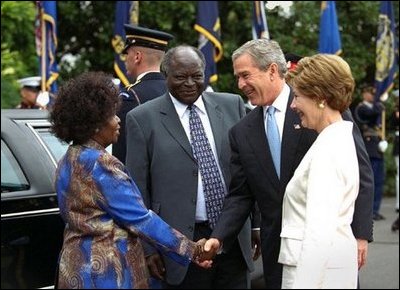
Recent terse statement from The American embassy prove that the honeymoon with the Kibakis is over.
• On winning the elections, President Kibaki abandons the memorandum of understanding with mainly LDP.
• President Kibaki becomes the first Kenyan President to live in State House. The last ruler in Kenya to do this was colonial era governor Malcolm MacDonald.
• Hawkers who had been promised allocations in strategic streets in the city are suddenly told that they will have to move to a place reserved for them in Parklands in the city outskirts.
• Kenyans are told that they should approach banks for loans since the government has worked hard to reduce interest rates.
• The government announces that about 500,000 jobs were created in its’ first year in power. Kenyans desperately glance at the calendar believing this to be an April fool’s prank. But the announcement was NOT made on April 1 and what’s more the government keeps a straight face and sticks to its’ “figures”.
• Kibaki’s appointments puzzle many Kenyans. Some of his appointees are even called out of retirement. “old is gold” hasn’t really jelled very well in Kenya in recent years. If anything multinational raking in billions in profits are being run by younger Kenyans who for instance don’t panic when they come anywhere near a PC. Kenyans should have known then.
• A commission of enquiry into Goldenberg scandal is appointed when there is enough evidence gathered over almost 10 years to go ahead with prosecution. Patient Kenyans however give the government the benefit of doubt. The entertaining commission with star performances by Kamlesh Pattni and Ketan Somaia soon help Kenyans to quickly forget.
• Kenya Times journalists arrested. Most Kenyans think to themselves, “wacha Kanu wakione” and let them have a taste of their own medicine. Kenya Times newspaper is owned by former ruling party Kanu. Little do they know that this is only the beginning?
• PS Githongo seeks political asylum in Britain. Hey, wait a minute I thought Kanu and Moi were out of power? Kenyans are shocked beyond belief.
Friday, March 03, 2006
Contents Thursday Edition March 2nd
Standard newspaper and KTN Raids: The Inside Story
Who Ordered Raid?
Why Was Standard Newspapers Raid Carried Out?
Who Ordered Raid?
Why Was Standard Newspapers Raid Carried Out?
Standard newspaper and KTN Raids: The Inside Story
"Even During Moi And Kenyatta's Darkest Hours, This Never Happened..."
As Kenyans and the world are still reeling with shock over the incident this week where masked policemen armed with automatic weapons raided the oldest newspaper in Kenya, more questions than answers are emerging from this strange event that is unprecedented in Kenyan history.
I will not waste your time nor mine with long philosophical analysis littered with the words, “possibilities” “probable” etc. Instead I will get straight to the point with the raw information I have gathered so far. I have put all in a simple Q&A format. I focused my research to answer the questions everybody is asking. Questions in bold headlines, the answer I unearthed in text format.
Who Ordered Raid?
The whole operation to invade the Standard group was hatched by Internal Security Minister John Michuki (of the now famous rattle snake comment), CID Director Joseph Kamau and President Kibaki’s special advisor (on political strategy) Stanley Murage.
Intensive research by the Standard Newspaper itself which no doubt benefited greatly from volunteered information from the sympathetic public goes further and puts the the three in Michuki’s office along Harambee House, hours before the operation, supposedly fine-tuning everything.
As Kenyans and the world are still reeling with shock over the incident this week where masked policemen armed with automatic weapons raided the oldest newspaper in Kenya, more questions than answers are emerging from this strange event that is unprecedented in Kenyan history.
I will not waste your time nor mine with long philosophical analysis littered with the words, “possibilities” “probable” etc. Instead I will get straight to the point with the raw information I have gathered so far. I have put all in a simple Q&A format. I focused my research to answer the questions everybody is asking. Questions in bold headlines, the answer I unearthed in text format.
Who Ordered Raid?
The whole operation to invade the Standard group was hatched by Internal Security Minister John Michuki (of the now famous rattle snake comment), CID Director Joseph Kamau and President Kibaki’s special advisor (on political strategy) Stanley Murage.
Intensive research by the Standard Newspaper itself which no doubt benefited greatly from volunteered information from the sympathetic public goes further and puts the the three in Michuki’s office along Harambee House, hours before the operation, supposedly fine-tuning everything.
Why Was Standard Newspapers Raid Carried Out?

Stephen Kalonzo Musyoka: This man's bid for the Presidency has put him at the centre of all the trouble.
To answer this question, we will need to ask and answer many other smaller questions, so here goes.
There is little doubt that the arrest of the 3 Standard Newspaper journalists for the Kalonzo story, and the attacks at Standard and KTN are linked.
The government is saying that the raid was carried out to counter a plan by the newspaper to do something that touched on “national security”.
In answering our question here, the first small question we need to ask and answer is “who owns the Standard Group.” The answer is people allied very closely to former President Moi. (Remember all the controversy when the newspaper changed ownership during the Moi era?
The arrest of the 3 journalists was because of a story that said that Kalonzo had secretly met with President Kibaki. Kalonzo Musyoka, a presidential hopeful is on record as having said that the rumour was leaked to the press to “mess him up” and that he knows the people who did it by name.
There are only two possible suspects who would have wanted to leak the story to the press. It could be a section of Kanu allied to former President Moi who are keen on the ODM breaking up. Or it could be Musyoka’s colleagues within LDP.
Musyoka has implying that it is the latter, the evidence on the ground implies that it is the former. I suspect that both answers are correct in that the two groups have joined hands to achieve a common goal they have. We already know that a section of Kanu are working with LDP within ODM.
The ODM is full of people whom the government deems dangerous. Dangerous enough to be a threat to national security.
The raids were carried out to send a clear message to this group, that the government side is now prepared to play “dirty” and that they are fully aware of what is going on.
Isn’t it strange that it is the Nation newspaper that breaks the Anglo Leasing scandal, a story that many are predicting will bring down the Kibaki administration, but then all the government attention ends up being focused on the (lower influence and lower circulation) Standard newspapers instead?
Presidential press unit head, Isaiah Kabira, in a meeting with one of the journalists who was arrested, two days before the story was published is quoted as having asked the journalist why the Standard newspaper was against the government.
So what is the threat on national security that Michuki and company were dealing with when they carried out such a barbaric move on the oldest newspaper in Kenya? Was the newspaper about to break another big story? Is this whole circus designed to pre-empt the breaking of such a story? Difficult to say but one thing is for certain, when you start asking such questions you are very close to the truth in this matter.
What Does it All Mean?
It means that the high-stakes-no-holds-barred battle for political power through the upcoming general elections is in full swing. But I strongly believe that the voters of Kenya have a nasty surprise up their sleeve for all these wheeler-dealers. Firstly the rules have changed, what worked in 2002 will not work this time. Secondly the Kenyan voters are getting angrier by the day. They’ll be very angry by the time they’re casting their votes. Angry voters can do strange things. Ask the older Bush how he lost to Clinton. Watch this blog for more details on this in later posts.
Subscribe to:
Comments (Atom)